The Plan Never Survives the Road
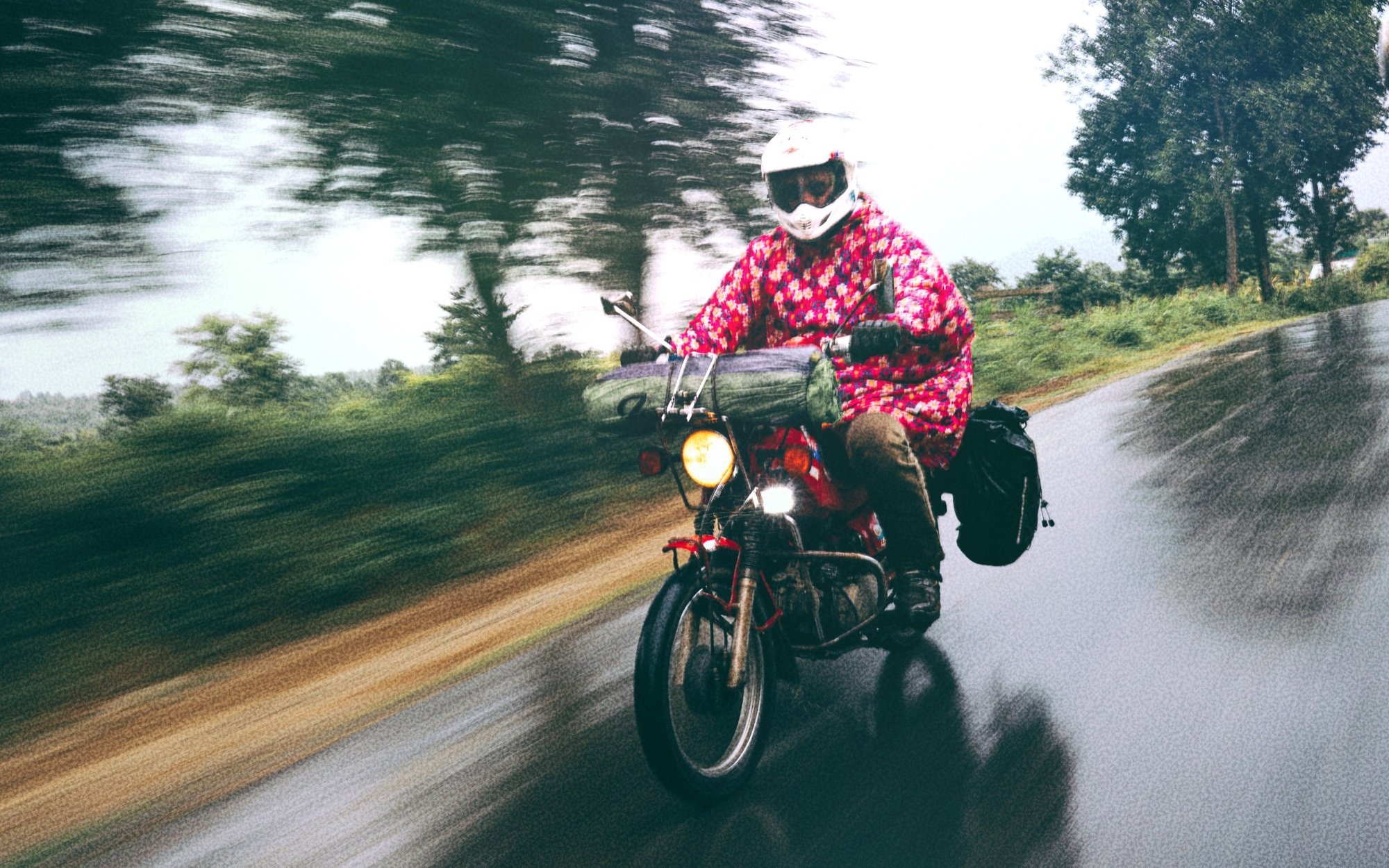
Liam Della left Perth on a $600 Honda CT110 in April 2017, planning to ride around the world in 18 months. Nearly a decade, three departures and one pandemic later, he is in Texas, bound for Tierra del Fuego.
Interviewed on the 09.11.2026
Liam Della was 23 when he left Perth, Western Australia, on 10 April 2017, carrying a plan that fit in one sentence: ride a Honda CT110 around the world in 18 months. "I left with a hopeful heart, certain that everything would work out," he wrote when he sent his story to Grit & Dust. It did work out. It just took a different shape and a different length. Nearly a decade later he has left home three times, shipped the bike home once, left it in Turkey for years, and is now in Texas, fixing it again and pointing it at Tierra del Fuego.
The usual way to tell a trip like this is by its route. Della's makes more sense told by its plans, and by what happened each time one came apart. "Somewhere I realised that good fortune isn't everything going according to plan," he writes, "but rather the serendipitous circumstances that happen when the plan falls apart, in the people you meet and the experiences you have because of it."
A seed, then a garden
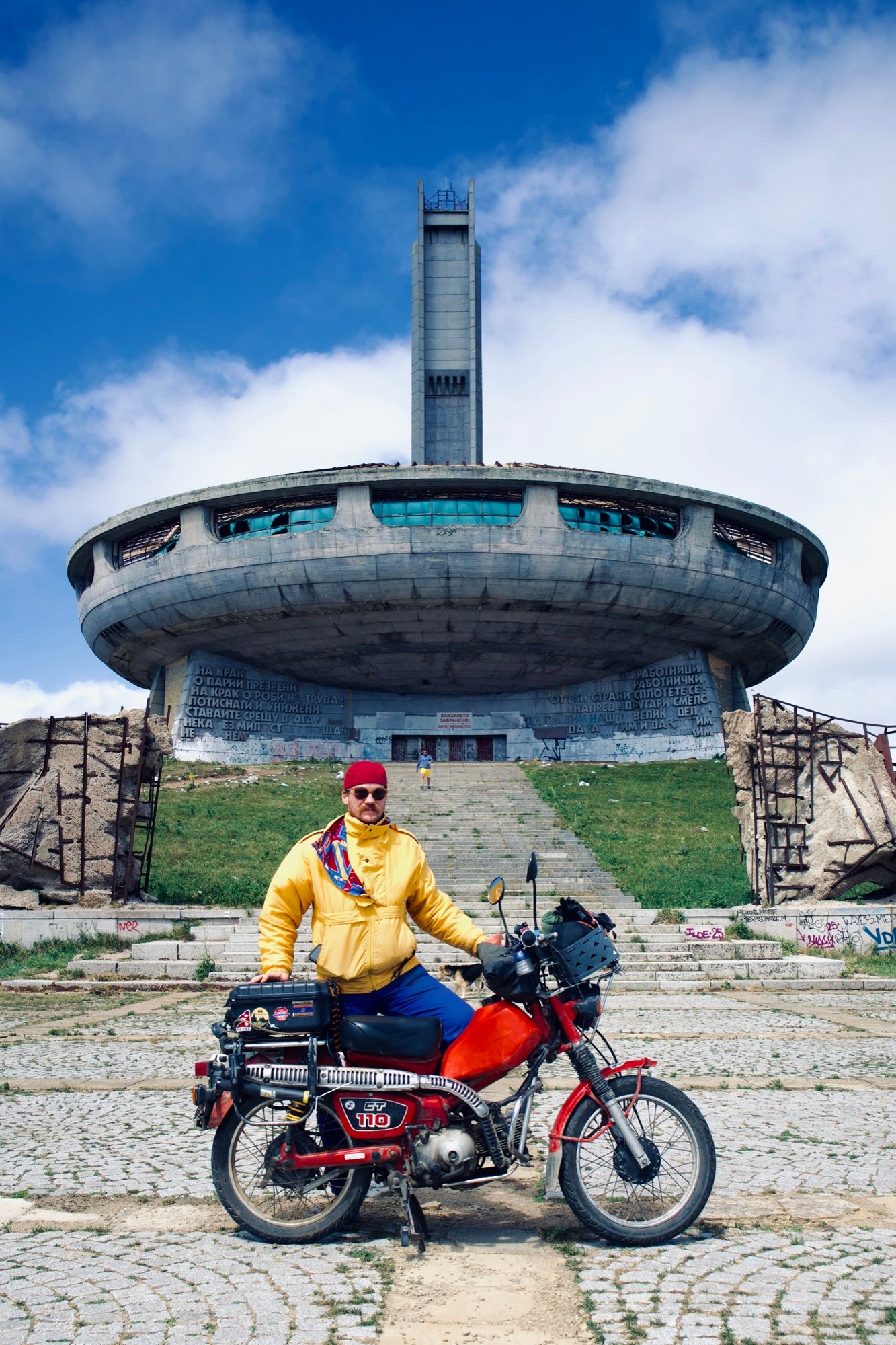
He cannot point to the moment he decided. "I think most trips like this start with a seed, something you pick up and pay very little thought," he writes. "Magazine cover, YouTube video or TV show. Then you keep gathering these little pieces of information and inspiration and eventually your seed has grown into a garden." Long Way Round was in there, and so was a conversation with an old friend about running away on an adventure by hitchhiking. For much of his teens, Della says, he was not that person at all. "I was quite a homebody."
The first departure was almost casual. He had about three months between buying the bike and leaving, and the date, 10 April, was arbitrary. It turned out to be the very beginning of the dry season in the north of Western Australia. "That trip just felt blessed," he says. "I feel like everything kind of went right along the way."
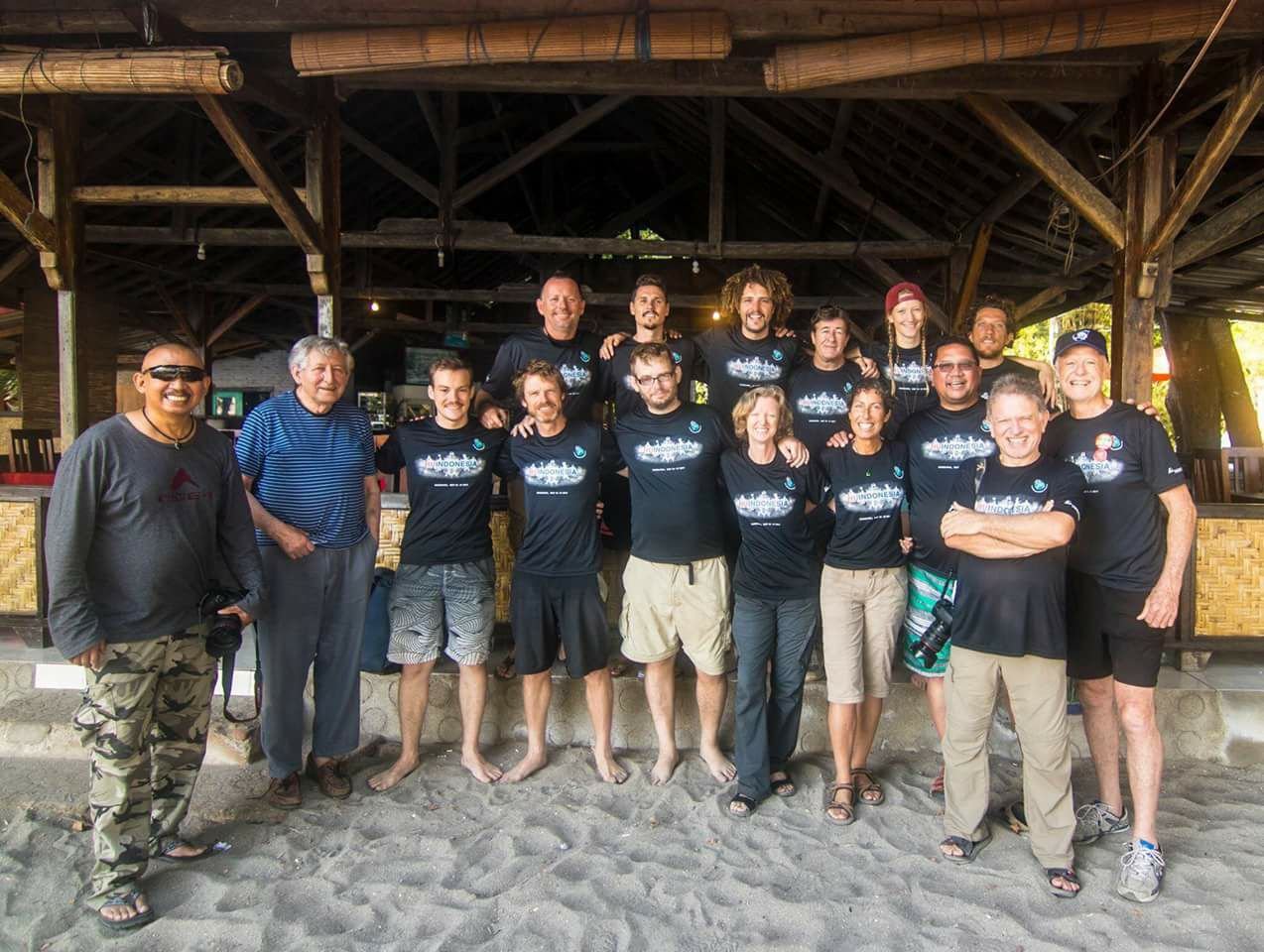
He rode north through Australia and across the Indonesian archipelago, through Malaysia, shipped the bike to southern India and carried on up through South Asia: about 11 countries in all. The bike, he says, gave him no real mechanical trouble. The rider did. "I fell off the bike maybe a dozen times in Indonesia," he says, "because I didn't know how to deal with the local traffic." In Indonesia he also rode with two Englishmen on CT110s of their own, and wandered into his first Horizons Unlimited meeting, where travellers had been flown in from around the world to speak. "It was comforting to meet people who were doing the same thing as you," he says.
One of the Englishmen gave him the best budgeting advice he has had. He had ridden his own CT from New Zealand to Malaysia and run out of money on the way. "Take three times as much money and twice as much time."
The first plan ends in Nepal
The 18 months did not survive Malaysia. Della met a woman there, and by the time he reached Nepal the two of them had decided to be together. He shipped the bike home. "I figured I would ride around the world in 18 months," he says. "That's not what happened."
What followed was a detour that did not feel like one at the time: six months in New Zealand working, hitchhiking and hiking, the cheapest flight out of it to Indonesia, a rented bike, a 70 cc Honda down the length of Vietnam. Then home, and a year of taking every shift he could get to pay for a second attempt.
Somewhere in those years he met Ted Simon, and one remark has stayed with him. Simon was always surprised, Della says, by how many people manage to ride all the way from Alaska to Argentina. "Life has a habit of interrupting the best-laid plans," Della writes.
Turkey, and then a pandemic
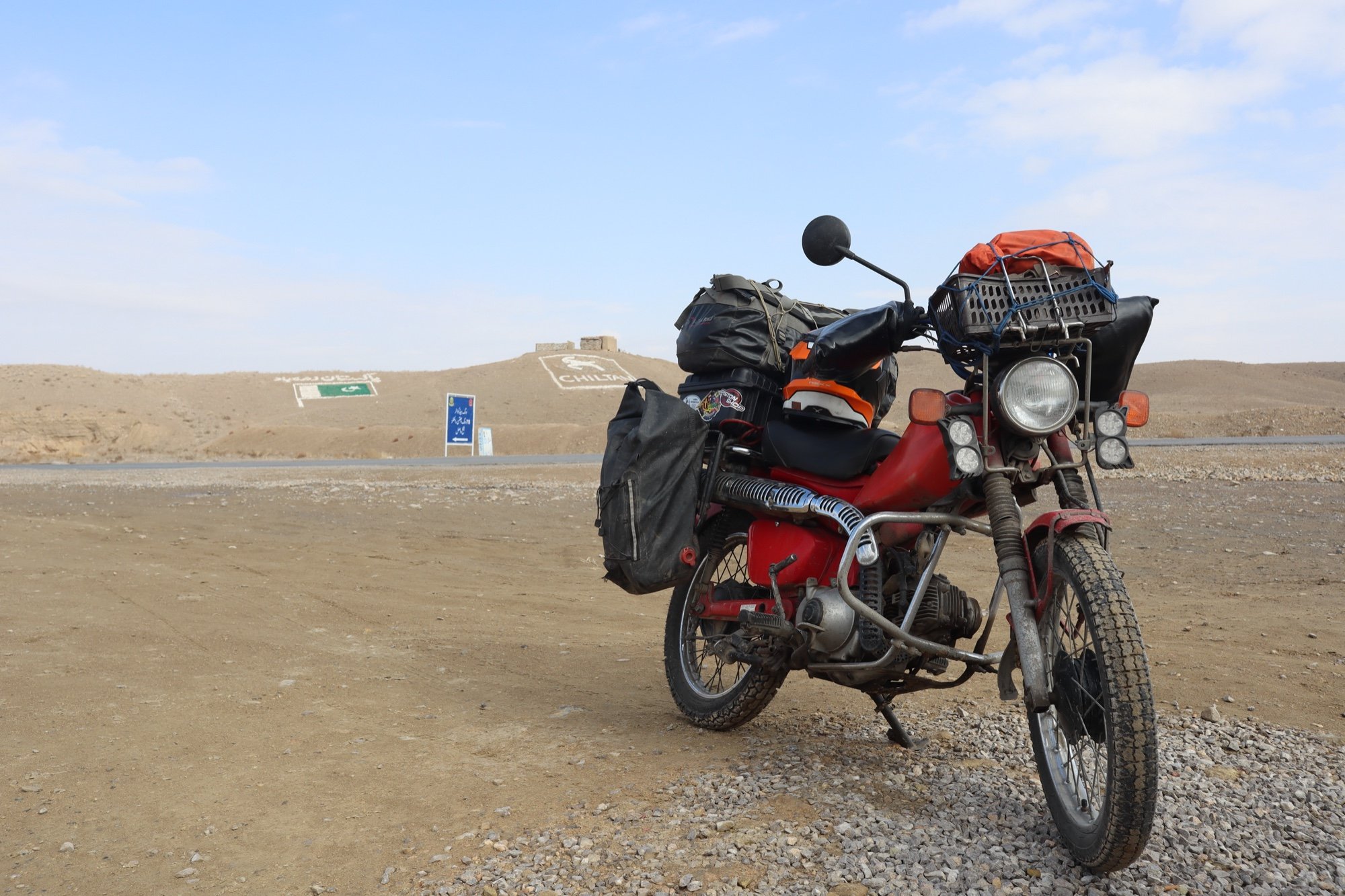
In 2019 he left again, this time with a partner, each of them on a CT110, riding from Australia toward Turkey. They were in Turkey when the pandemic closed the borders. Both had to go home to their own countries. The bikes stayed where they were.
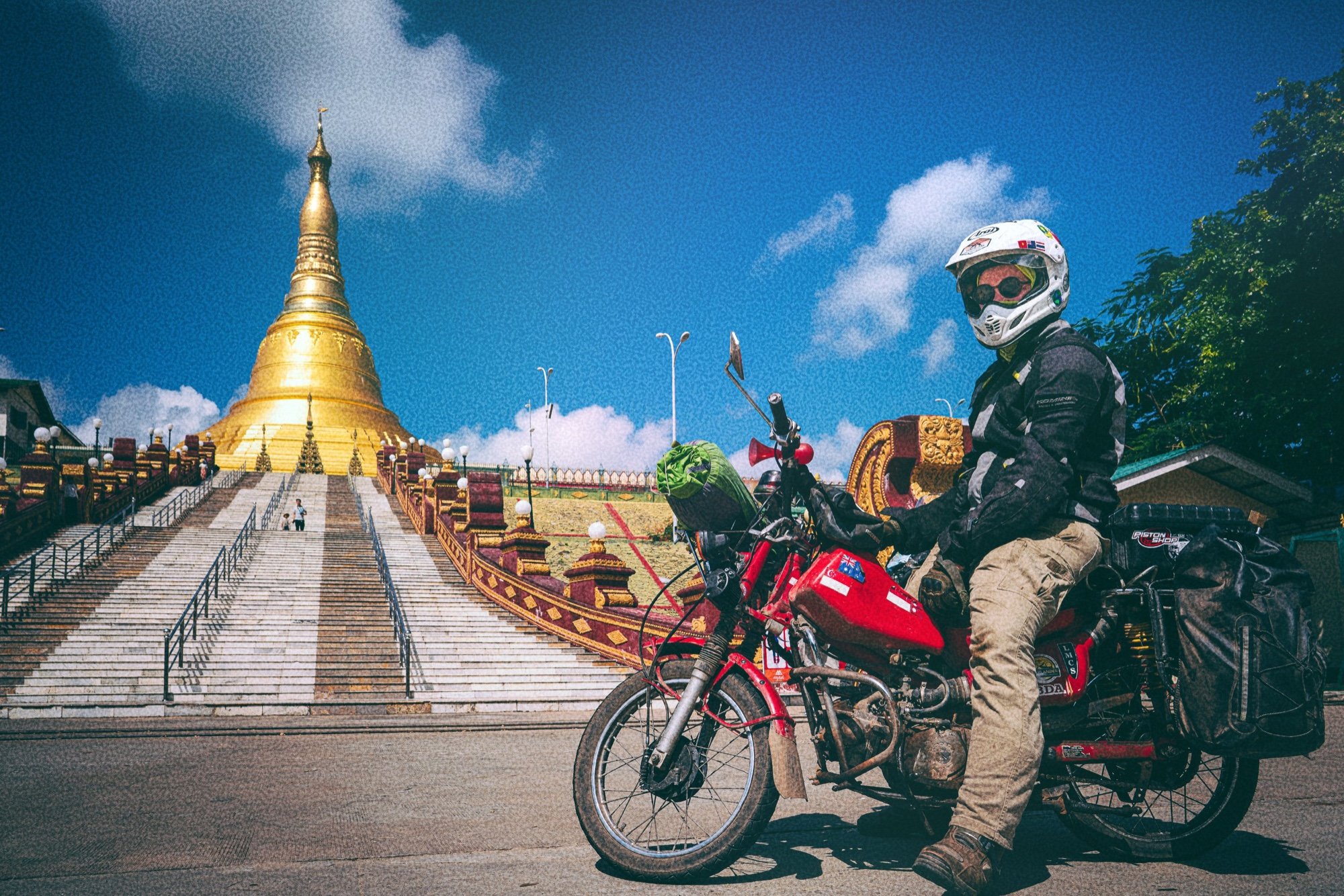
Della went back to a normal life, he says, but the bike stayed in the back of his head. He had now been sent home more than once by things he could not control. "For a long time I wondered if that meant I'd failed," he writes. "In retrospect, I don't think it did."
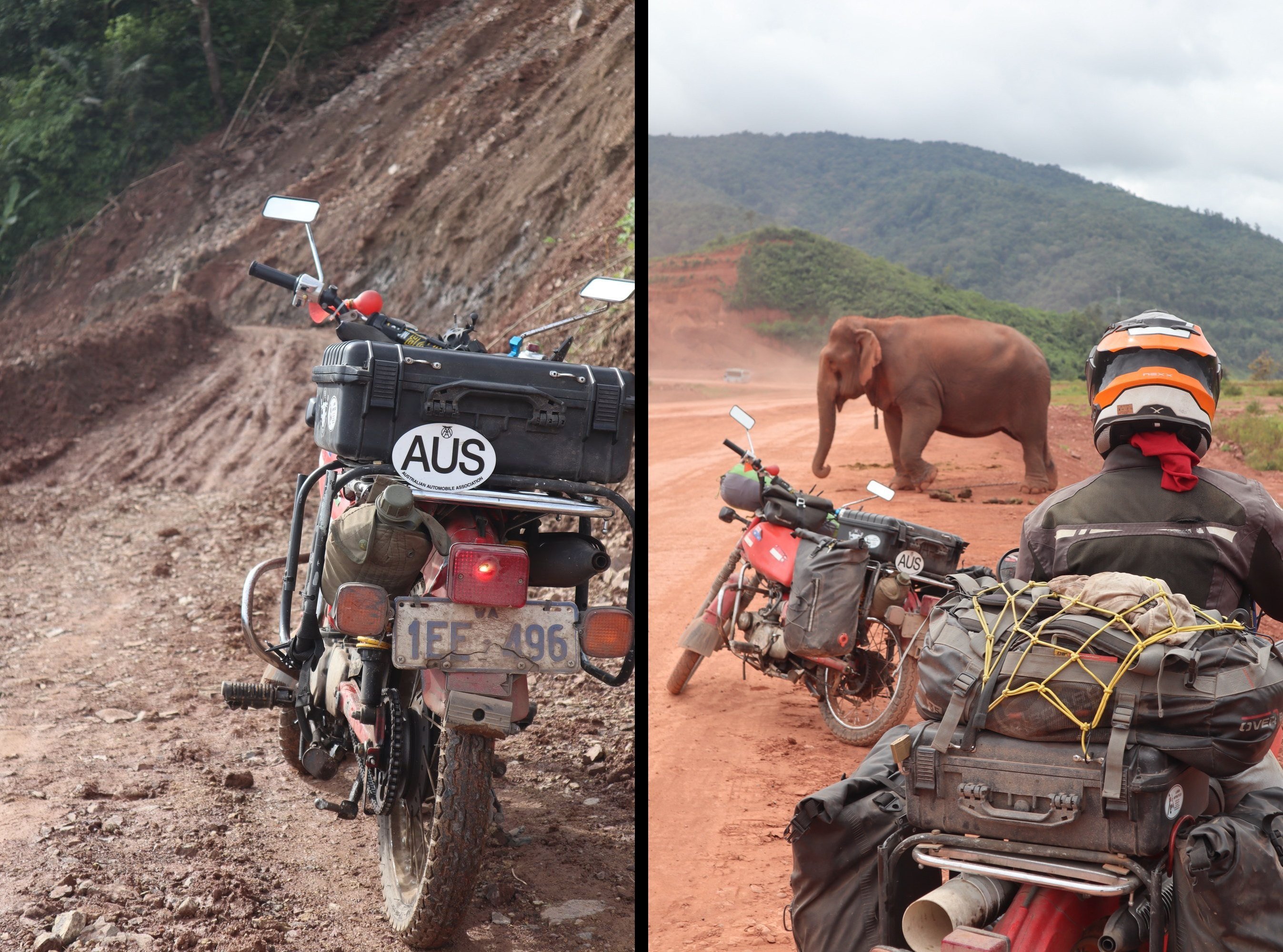
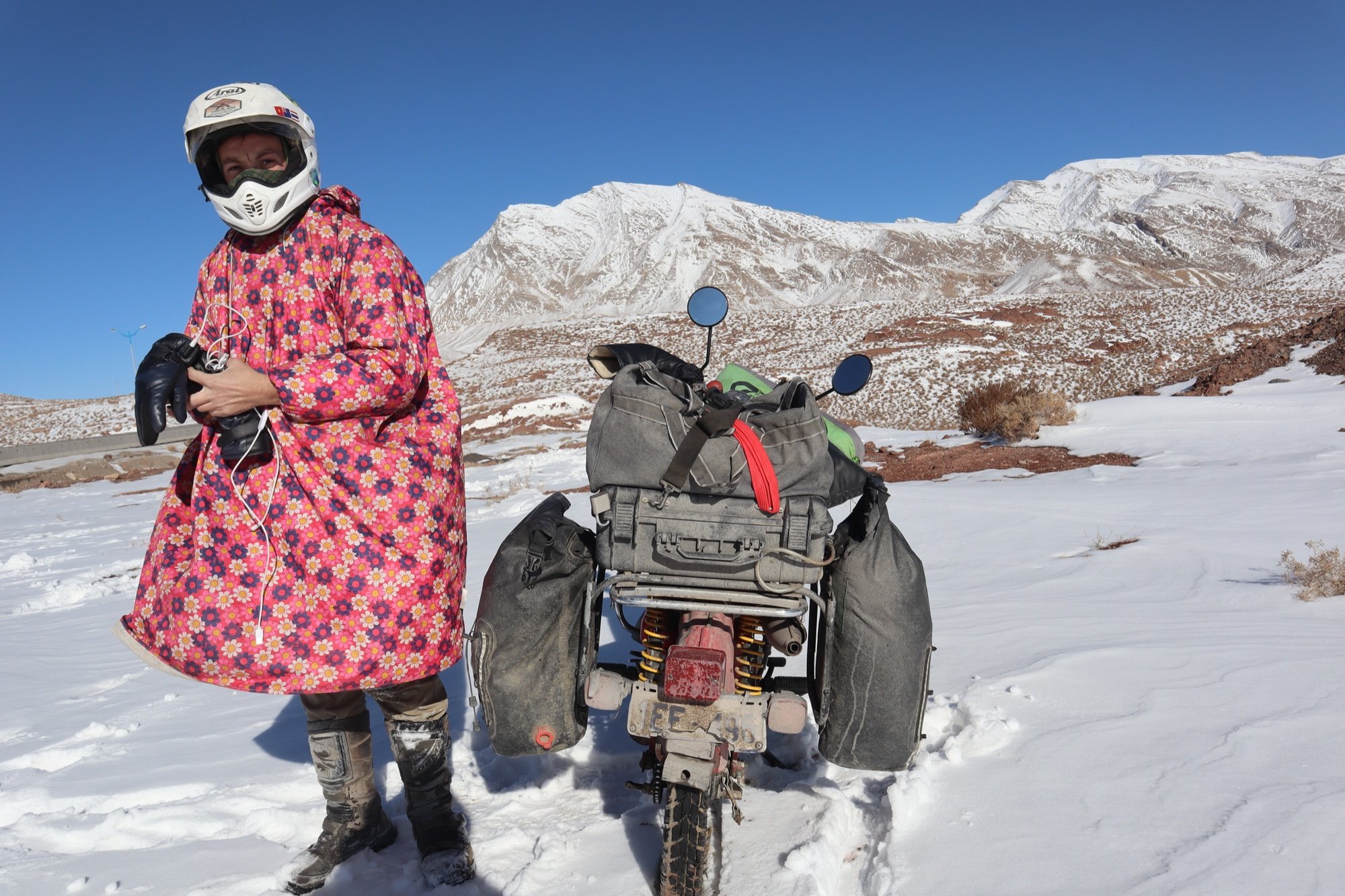
His answer came to be a rule for the road. "Destinations are useful because they give you a direction to ride each morning, but they're never the whole point," he writes. "A journey isn't defined by whether you reach the line you drew on a map. It's defined by the person you become, the people you meet, and the experiences you collect along the way." And on the endings: "Journeys don't always end where you expected them to. Sometimes they simply reach their natural conclusion. That isn't giving up, it just means it's time for the next chapter."
The long way back to the bike
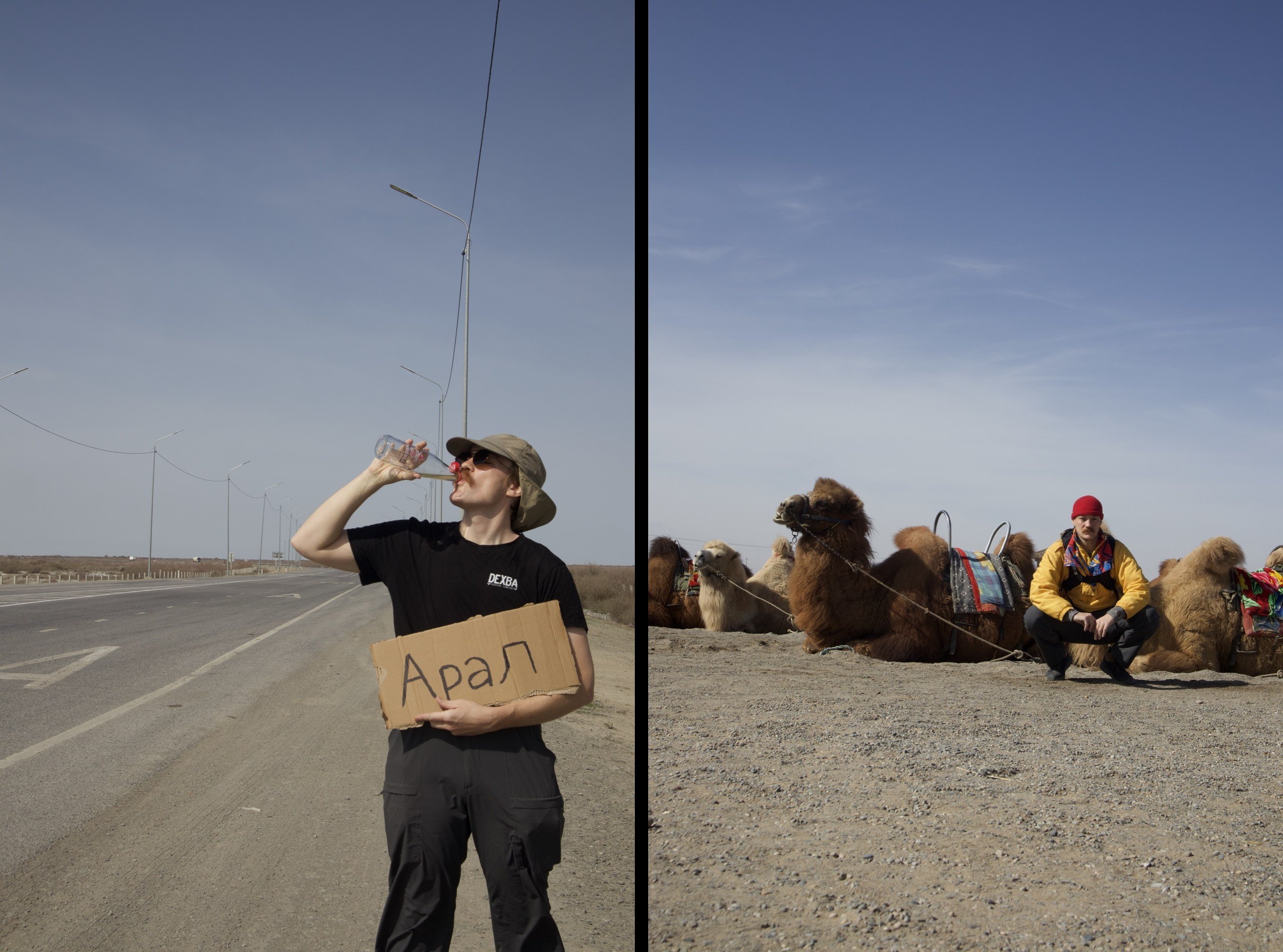
In January 2025 he started a third time, and this time without a motorcycle. From Kuala Lumpur he took trains up into China, then hitchhiked the rest of the way across to Turkey to find the bike he had left there. "I've been on the road since January last year," he says, "and I'm trying to finally get down to Tierra del Fuego."
The Next Adventure Awaits
Join The Dust Report, our adventure newsletter. Stay up to date with travel stories from the world of adventure, in your inbox every other week.
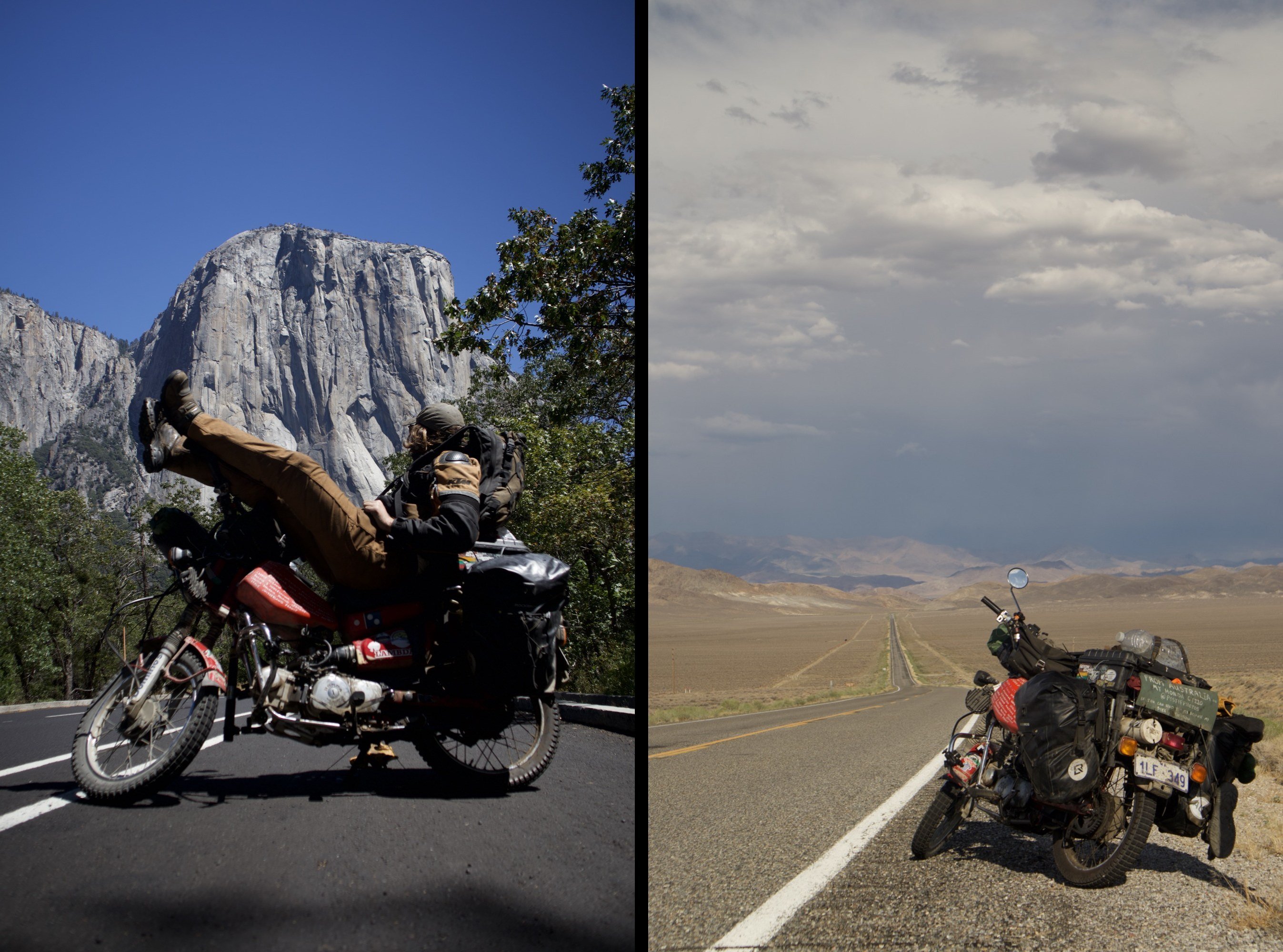
He thought, once again, that 18 months would cover it. "That would have been practical," he says, "but life got in the way, and I was enjoying experiencing things and spending time with people, and I just ended up taking way longer." Europe he crossed "taking the least direct route possible". Then North America, where the breakdowns began. He lost at least a couple of months to them in Canada alone. At one point, in rural Saskatchewan, he spent five weeks waiting for parts. A local family had seen him pushing the bike along the highway, stopped, and offered him a place to stay while he worked on it and waited.
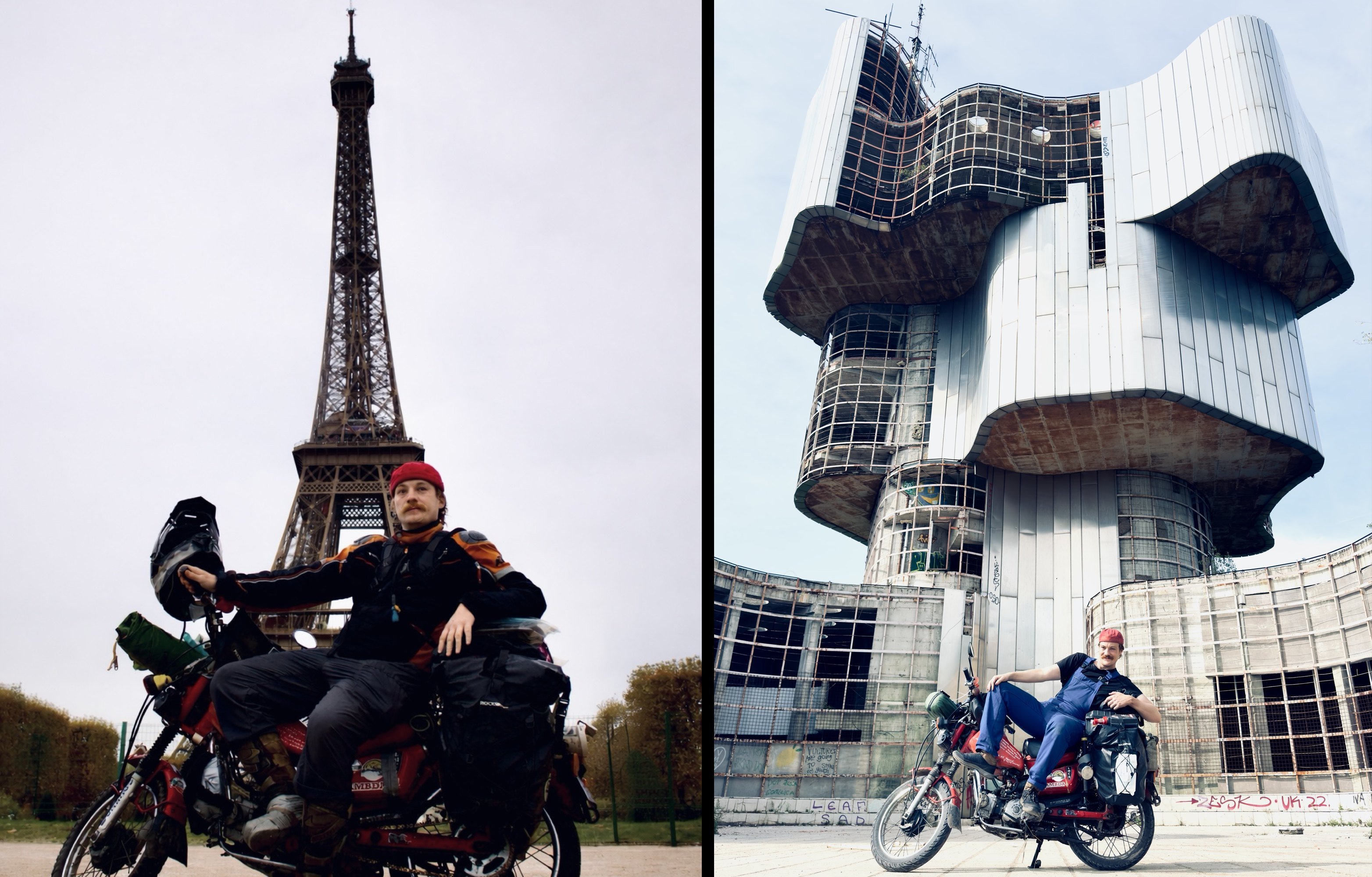
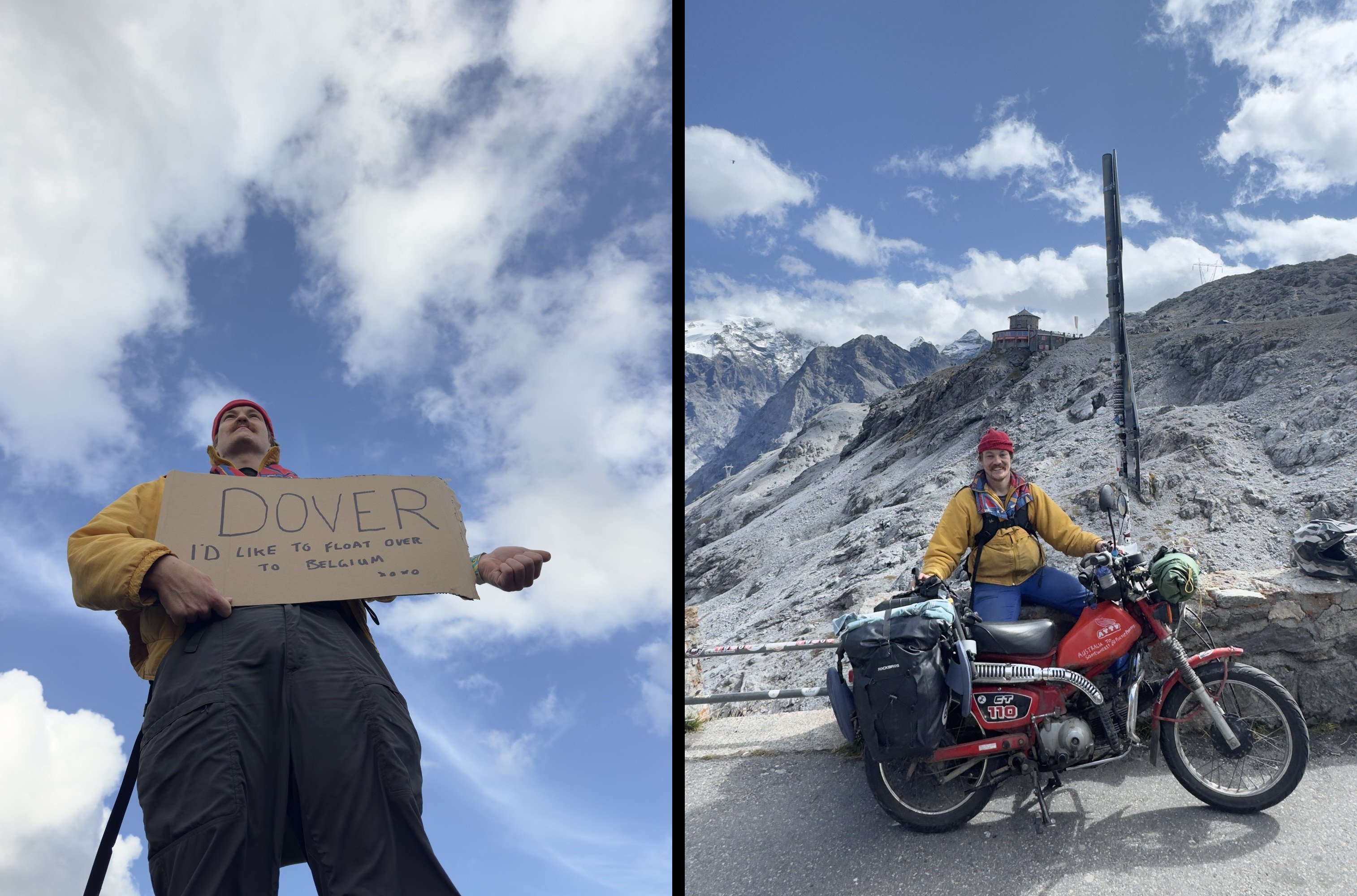
He has a procedure for days like that. "You don't solve everything at once," he writes. "You push the bike somewhere safe. You find a bed for the night. You order the parts. You wake up and do the next thing."
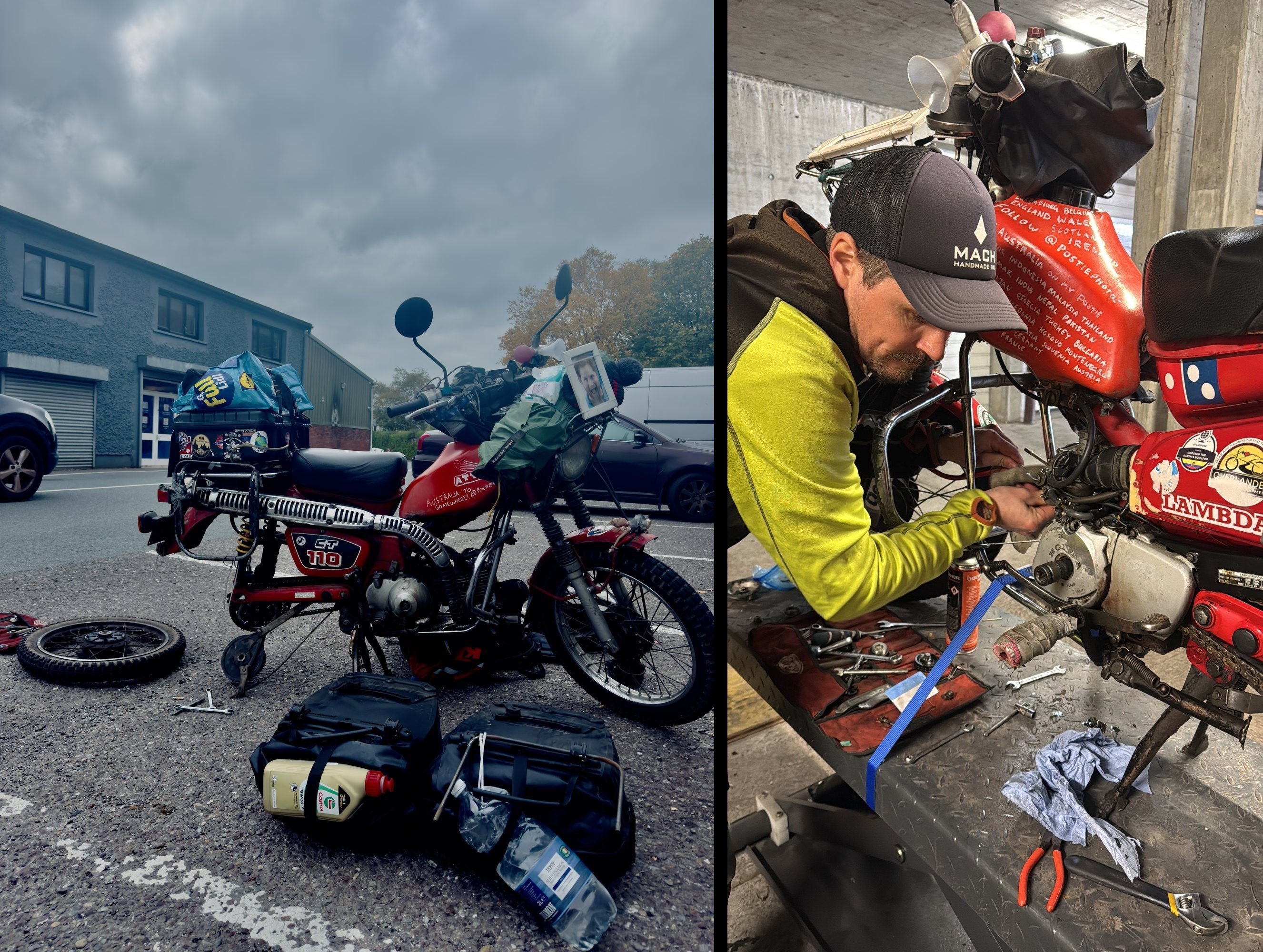
The strangers, he says, are the reason the arithmetic works at all. "Despite everything that's changed, the people I've met remain overwhelmingly generous, kind, and decent," he writes. "Time and again, strangers have reminded me that the headlines rarely tell the full story." The world, he adds, feels more divided than it did when he first left, and routes he once rode across Asia are now closed by conflict, political instability and growing bureaucracy. His experience on the ground has pointed the other way.
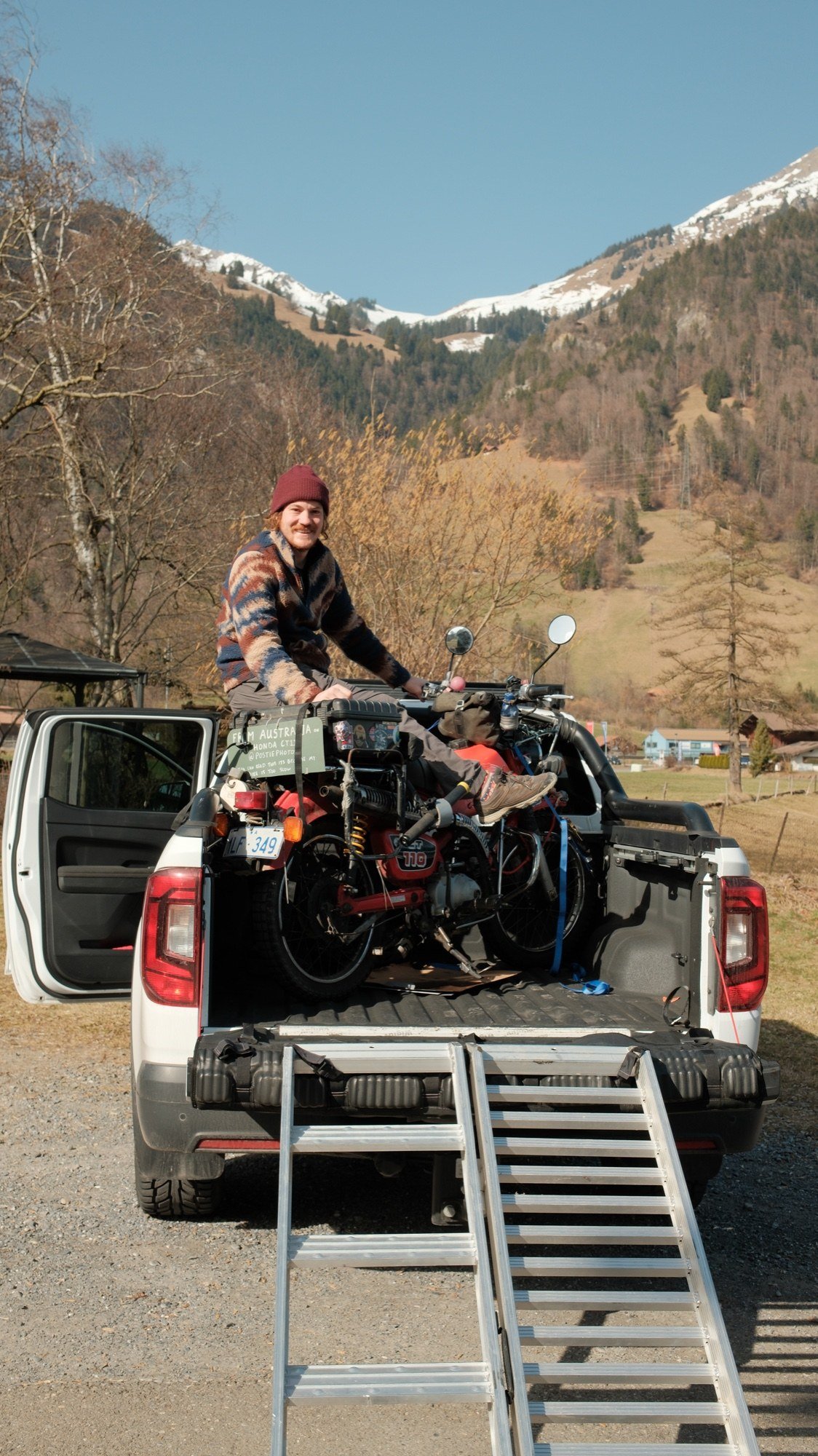
His philosophy of the road is the same one the plan taught him. "Tours, trips, adventures, journeys have a mind of their own," he writes. "They rarely go to plan. You can try to force your will on them and control them but you'll only end up getting frustrated. Best to let the circumstances happen with you and go with the flow." He also borrows a line he attributes to Steinbeck: a trip is like a marriage, and one way to be certainly wrong is to think you control it.
Gloves, a car park and a record
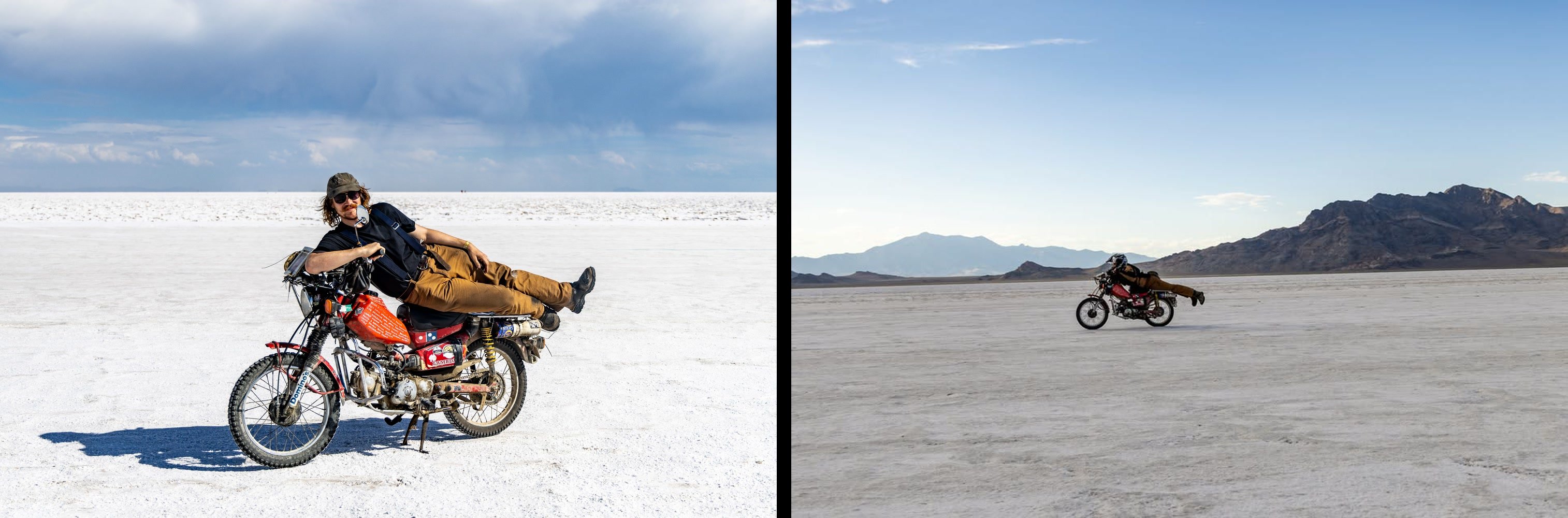
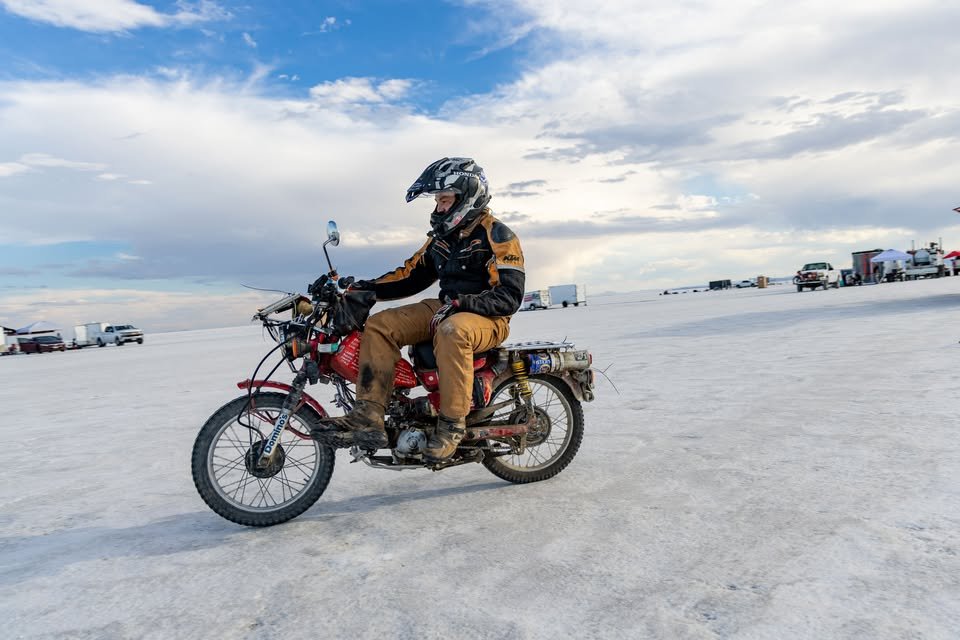
The best example of the principle comes from the Bonneville Salt Flats. Just before reaching them, Della had his gloves stolen. He went to a dollar shop hoping to find something to protect his hands, and met a land speed racer in the car park. After a short conversation he was sleeping on the floor of the team's motel room and working as a pit crew member. "We ended up setting a record over the next couple of days," he writes.
The racer, he says, is now hosting him at his house in Texas, and will ride with him to Argentina, all from a single encounter in a car park. For a rider who has spent most of his time on the road alone, that changes the next stage. "It's almost like a new birth," Della says.
South
The plan now ends in Tierra del Fuego, after which Della intends to ship the bike home and ride across Australia to get there. How long that takes depends on the seasons. "It's either six or 12 months," he says, "but I have to work it out once I get moving. I've sort of learned that forward planning is not always that accurate."
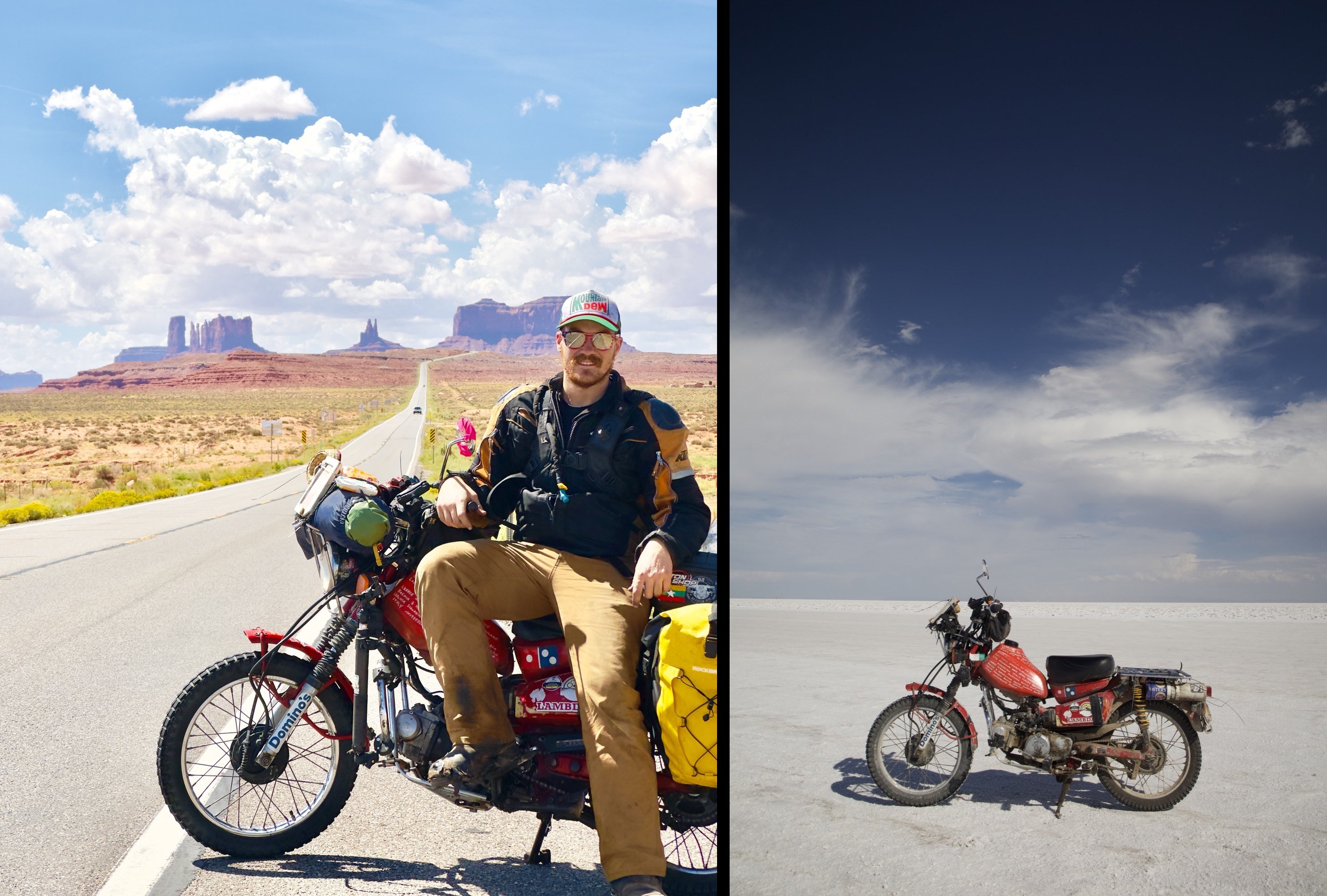
After 18 months on the road he admits to being a little tired. "There is definitely a mental fatigue," he says. Pushing through gets him another wind, and what helps most is change: he is hoping Mexico and Latin America will bring a new culture, a new environment, new geography. The Darién Gap, he says, is a problem for later. He would rather go by sea, perhaps on a yacht, but has "no fast and hard rules about not flying". If the most practical way across is by air, he takes it.
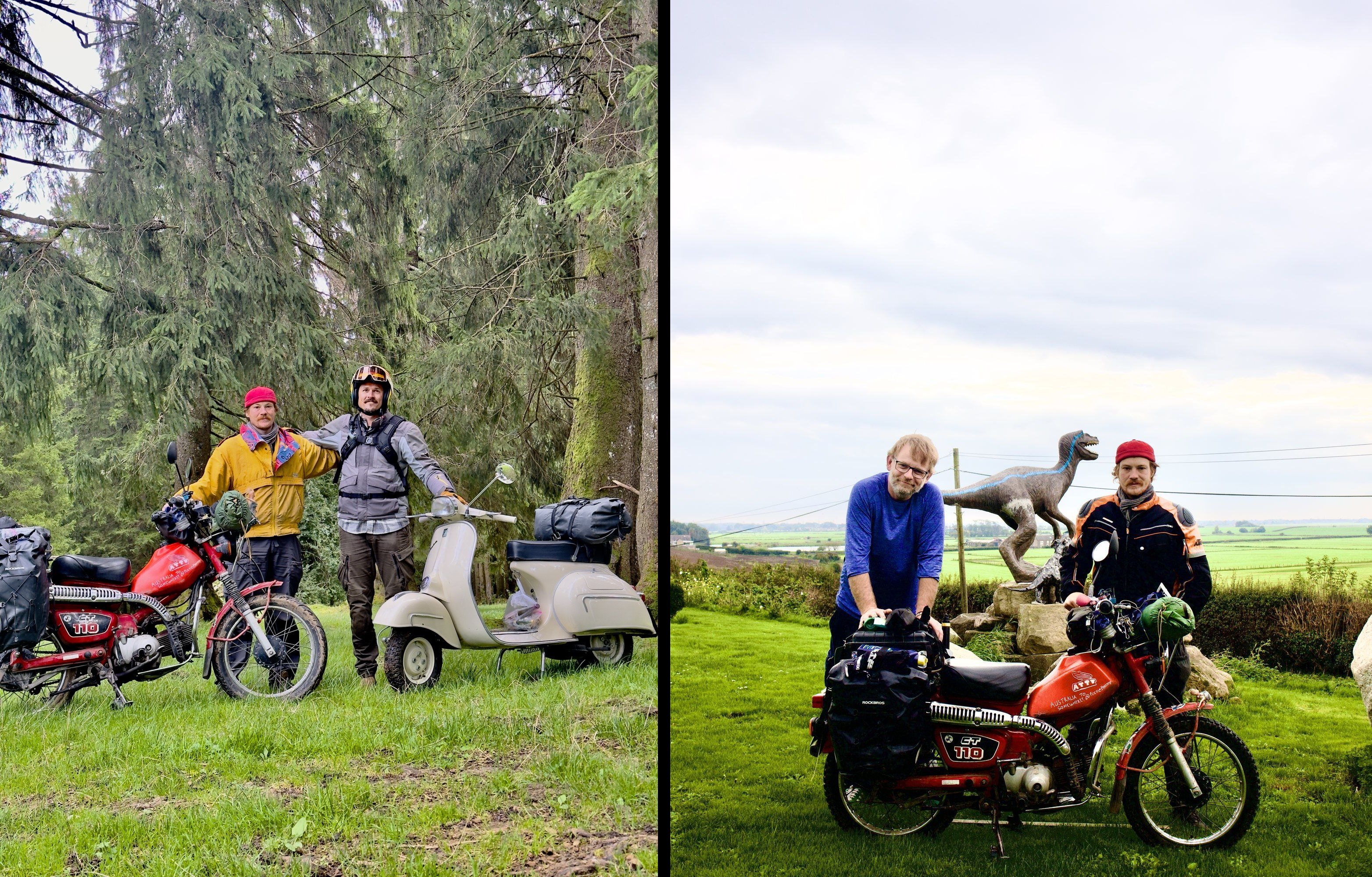
Asked to describe adventure in three words, he answers: "Connection, presence and acceptance." Asked why anyone else should try something like this, he goes wide. "I think everyone should try to broaden their horizons, whether that means travelling a few miles from home or crossing a few continents," he writes. "You get a much better understanding of the world when you go out and experience it through your own eyes, rather than seeing it through someone else's perspective."
Setting off is the part he is proudest of. "Setting off has never been about knowing what lies ahead. It's about accepting that you don't and being open to it," he writes. "It takes courage to walk away from certainty in pursuit of possibility and I'm proud to say I did it."
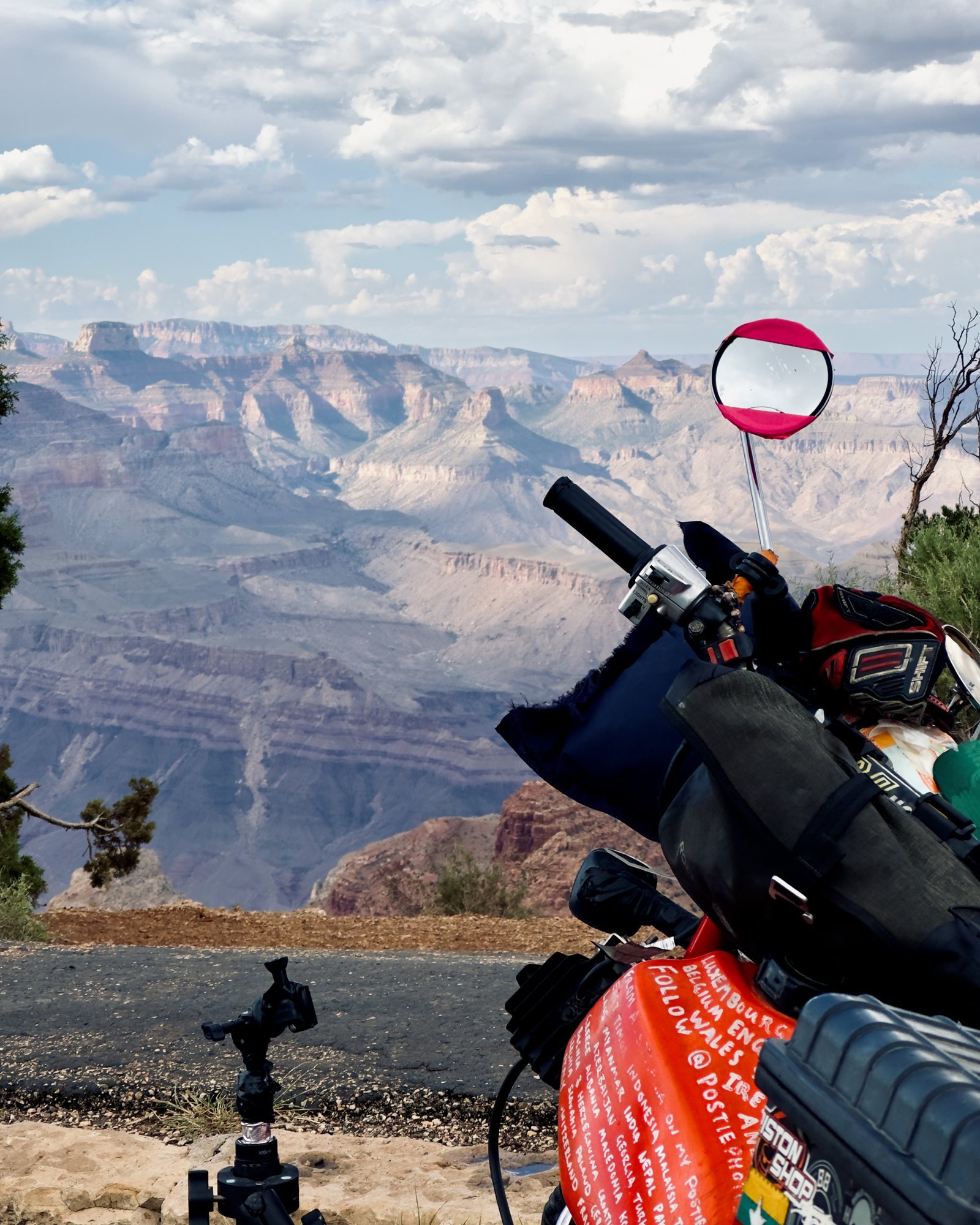
Beyond Tierra del Fuego, the last place on his list is Africa, and he has a loose idea for that too: an old limousine from England to Cape Town, filled with friends, the opposite of one man on a small bike. It started as a joke, he says, and there are no plans set in stone. It is, he points out, no more absurd than a 100 cc motorcycle as a touring vehicle. The supply of ideas is not a problem. "There's a whole garden of mad ideas ready for the harvest," he writes. "But for now, RTW on the postie."
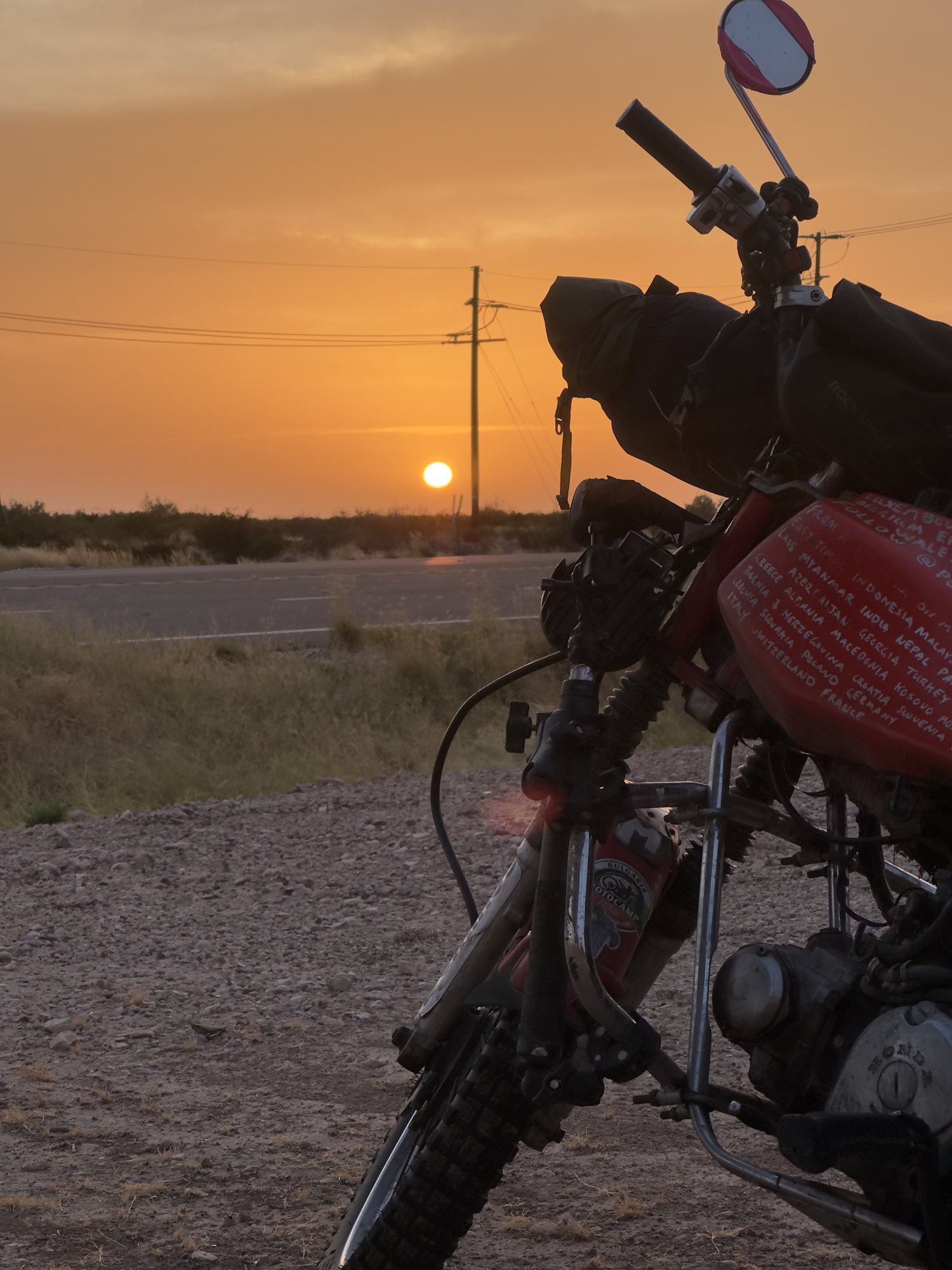
Connect with Liam Della here: Instagram
© 2026 Grit & Dust (The Plan Never Survives the Road). Photos © 2026 Liam Della. All rights reserved. No part of this article or images may be reproduced, distributed, or transmitted in any form without prior written permission.