The Fine Print on Zero Impact Travel
David Bossek's ONE PLANET Expedition is a four-year journey around the world built around two questions: what does travel actually cost the planet, and how can an expedition give something back rather than simply move from A to B?
Interviewed on the 11.10.2026
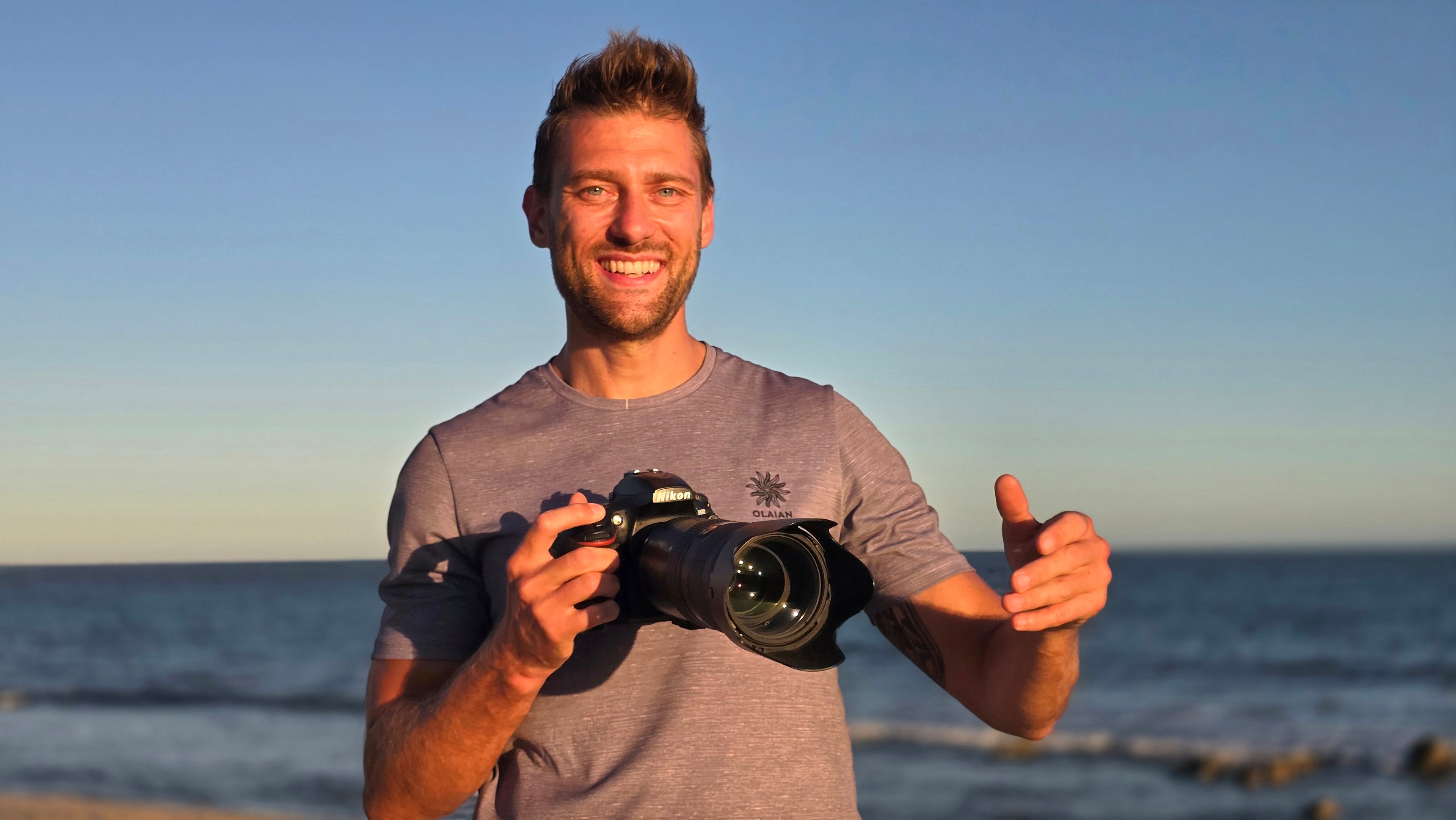
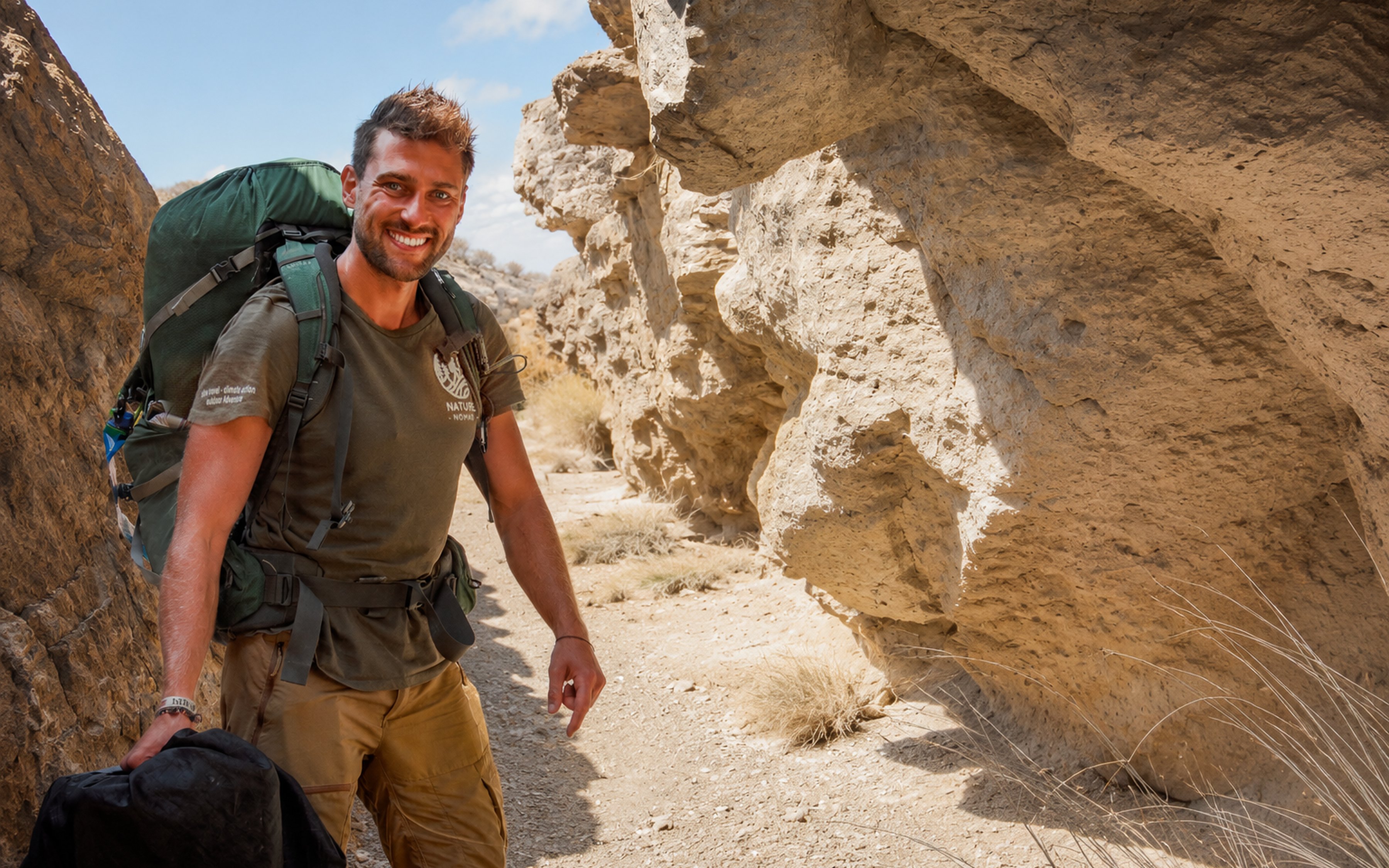
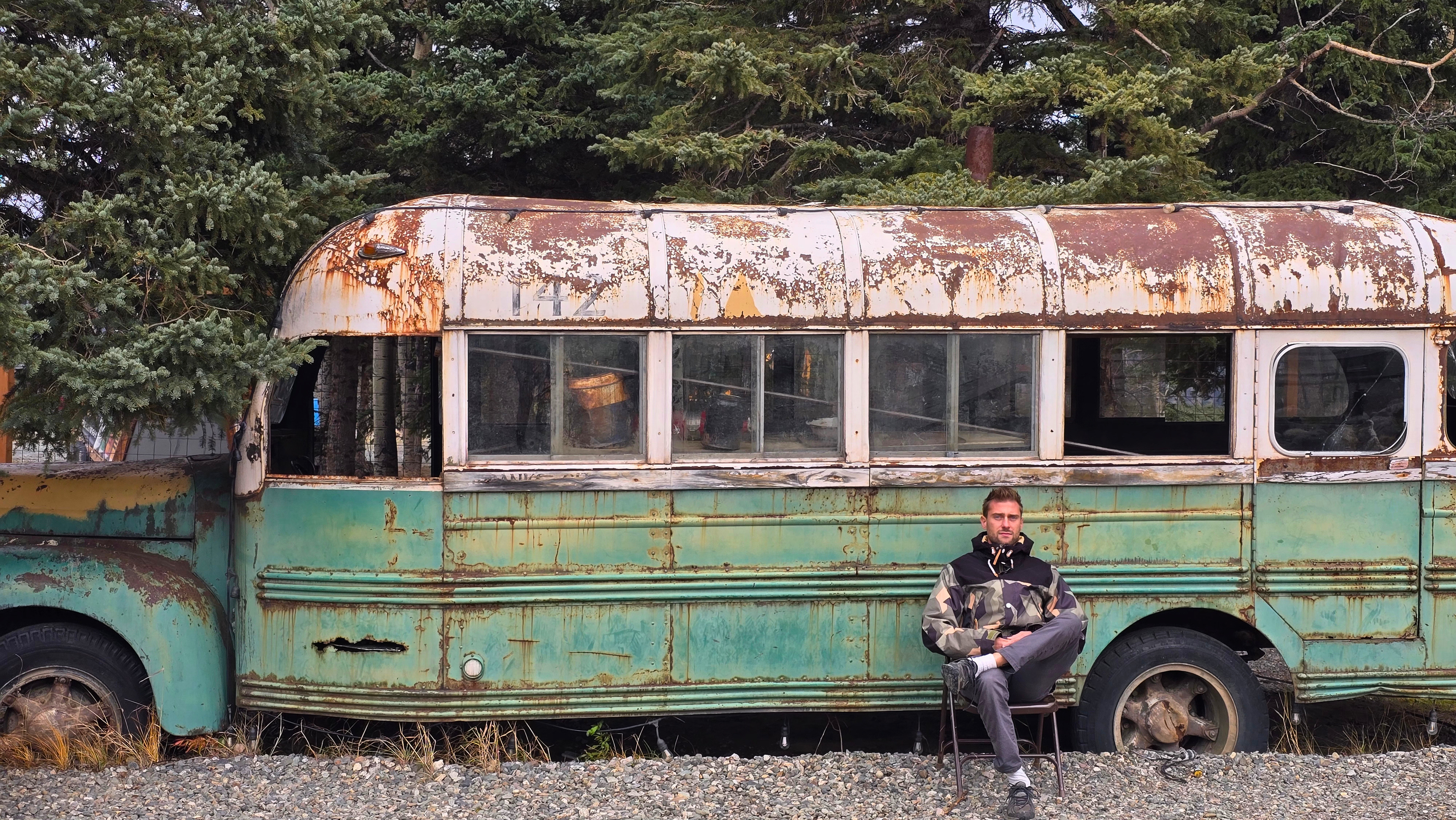
David Bossek holds a doctorate in Life Cycle Assessment, a field of environmental science that assesses the environmental impact of a product, a service or, in his case, a journey around the world, across its full "travel cycle." His research examined the environmental impact of human consumption, and he supervised students running their own environmental assessments — research that had put him on a conventional academic path, with office-based work, a regular nine-to-five routine and promising career opportunities. It was a path, by his own account, he chose not to follow. Instead, almost three years into a planned four-year expedition around the world, it has put him in situations like crossing two oceans under sail, or floating on a self-built raft on a tributary of the Amazon, kayaking without a life jacket or satellite device along the coast of Panama, and asleep under the trailers of trucks whose drivers picked him up hitchhiking. He travels almost entirely overland and by sea, on a rule of his own making: no flying, if he can possibly help it. "Zero impact" was the project's original name. Three years in, David is the first to say the name came with an asterisk he's still chasing down, footnote by footnote: a cancelled ferry here, a vegan month there, a body that burns calories slightly differently from the next traveler's. Getting to actually zero, it turns out, is less a rule than a running negotiation.
A body that stopped, a life that didn't restart the same way
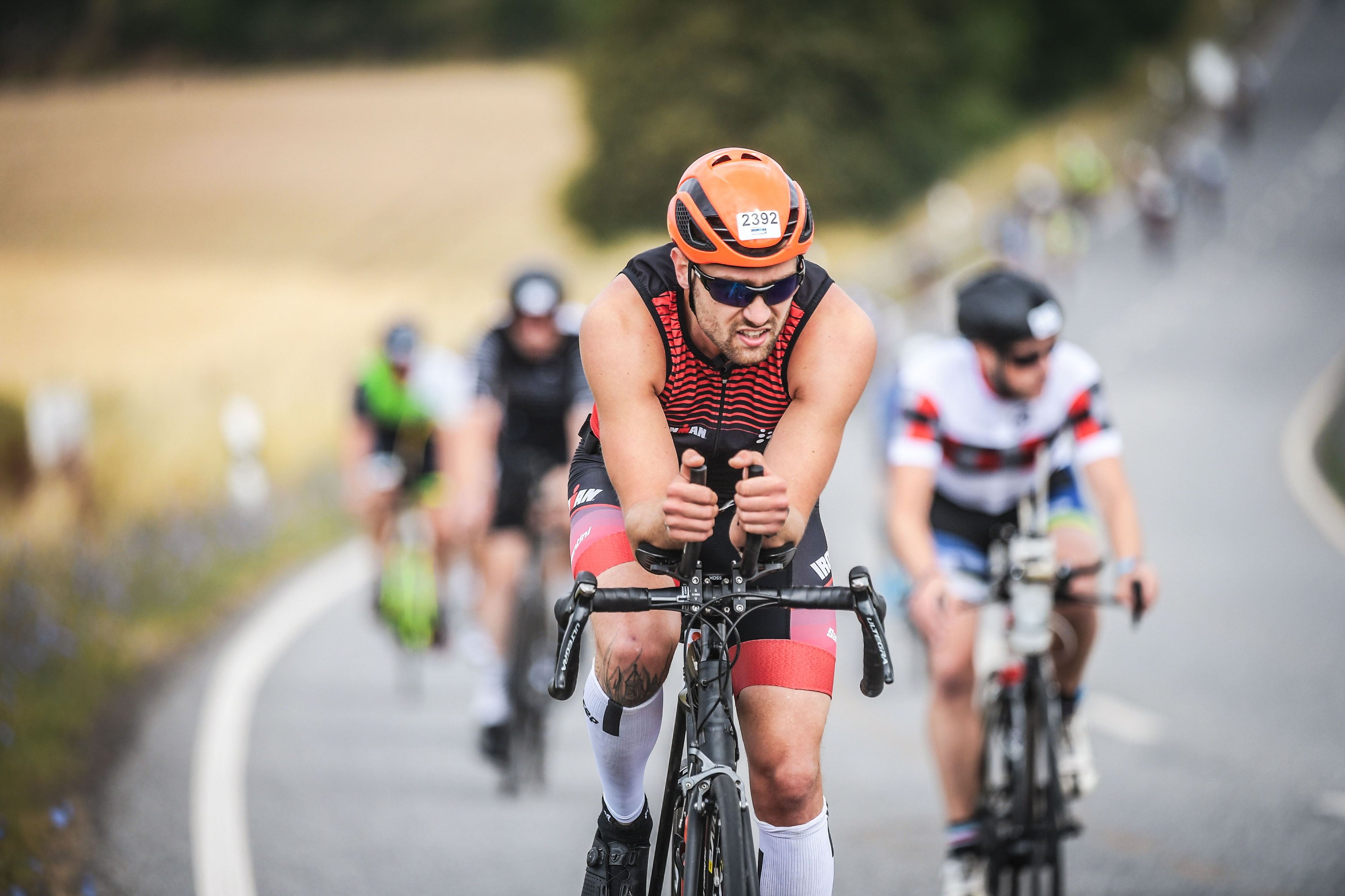
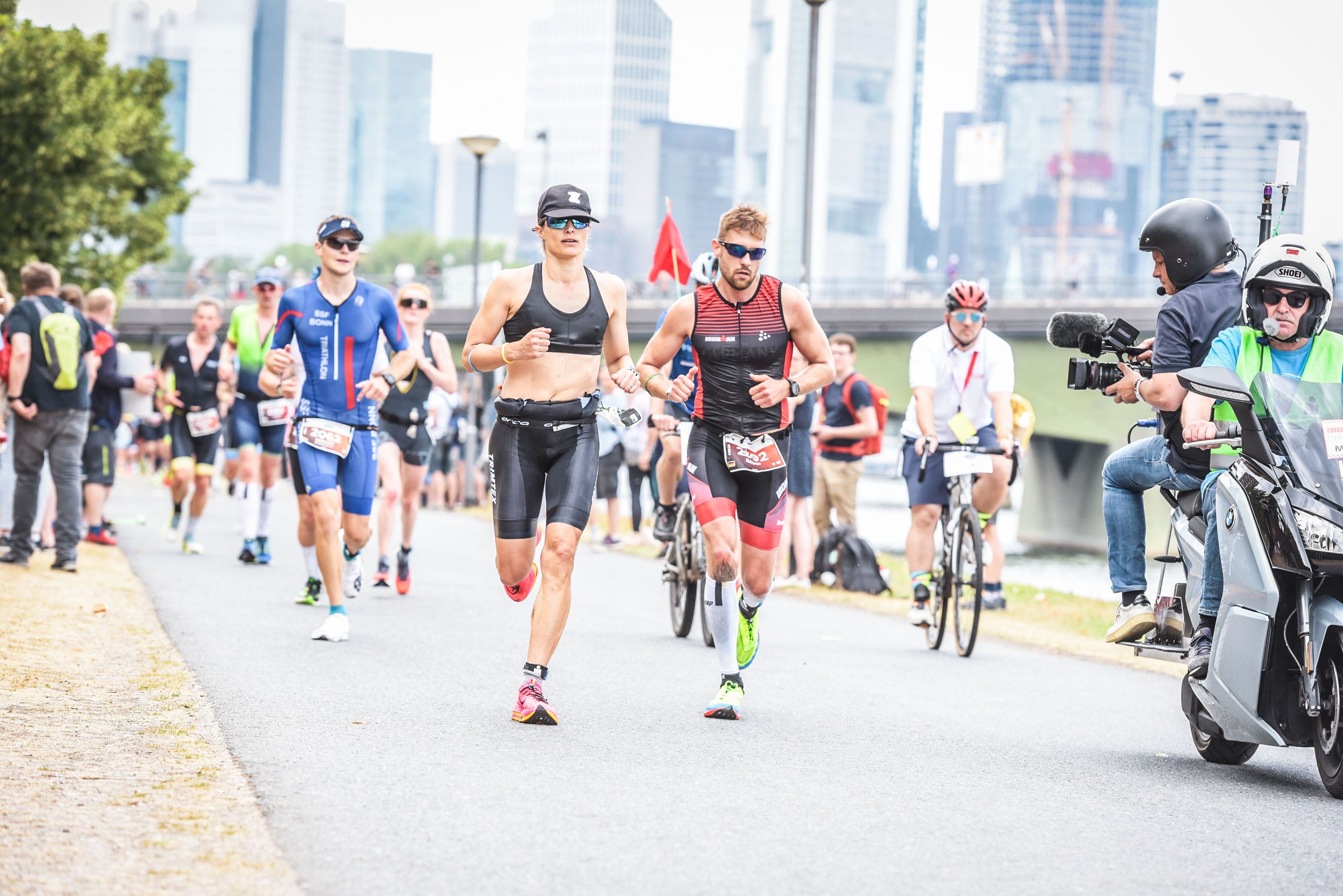
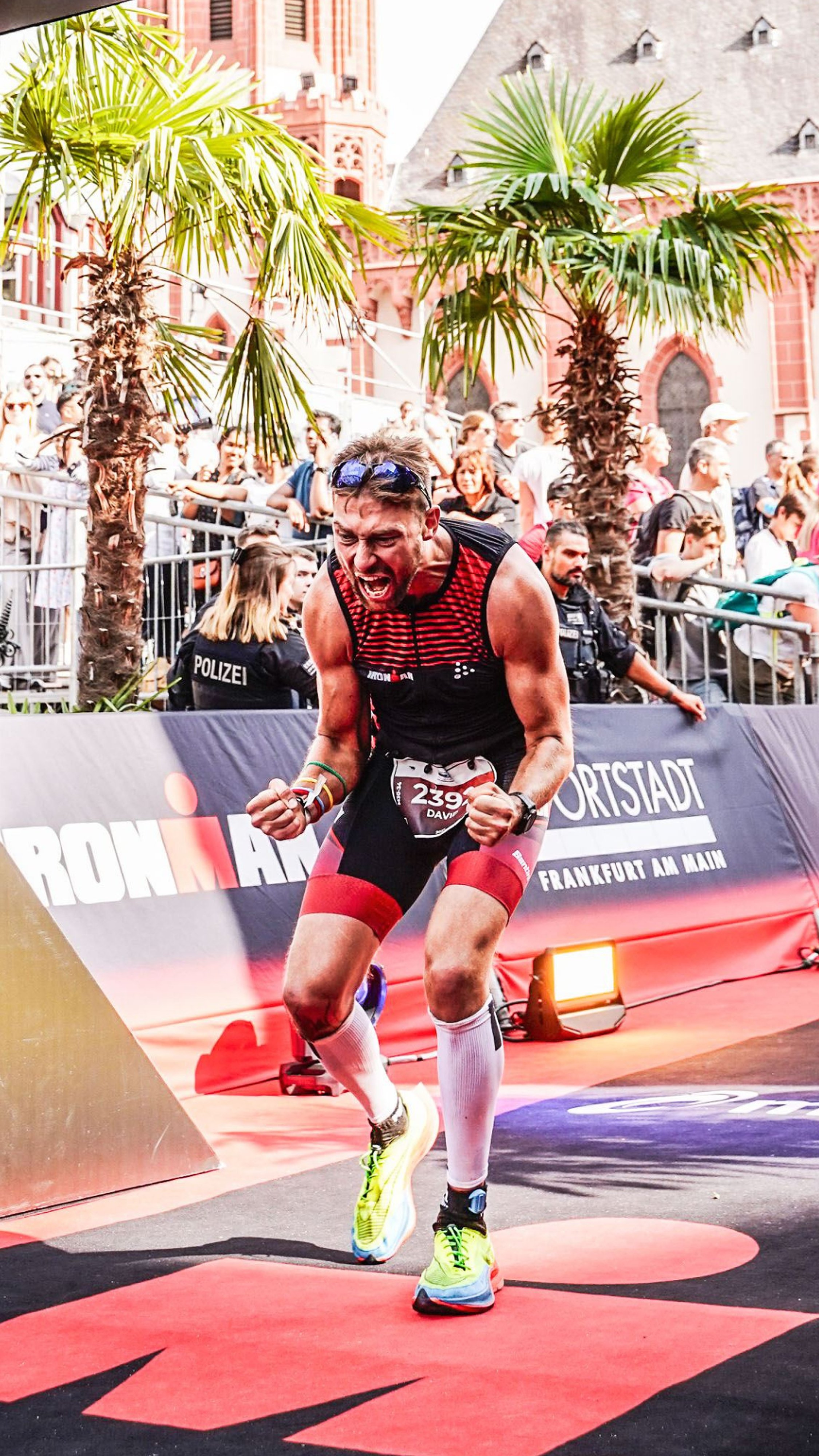
Before any of this, David was a research assistant working through his PhD while training as a triathlete on the side. A serious cycling accident changed both tracks at once, and by his own account, could easily have been fatal. He came away with a brain concussion, a broken hip, and thrombosis that developed in one leg during the months afterward, relearning to walk on heavy medication. "A serious cycling accident left me unable to walk for months," he says. "Instead of waiting for the 'right time', I decided to turn my life upside down."
The accident didn't hand him a new idea. It gave him time to think, and room to act on an old one. He had always wanted to travel once around the world; what changed was his tolerance for doing it the ordinary way. Having built a career studying and teaching how to reduce environmental impact, he couldn't square that with booking flights around the planet himself. "I can't preach water and drink wine," he says. Around a year after the accident, he started the expedition, in January 2024.
Zero Impact Travel to ONE PLANET Expedition
The project started as the Zero Impact Expedition, with a narrow, literal goal: get his own carbon footprint back to zero by the time he reached Germany again. He started to build a tool for it himself, the GREEN TRAVEL Carbon Calculator, now publicly available, which tracks categories most travelers never think to log: transport mode, accommodation, food (down to whether a meal was sourced locally or flown in, and adjusted for the traveler's age and build), gear, even streaming and general lifestyle habits, with an option for anyone traveling with a pet. The plan is to work with a university on a comprehensive environmental assessment of the entire journey—either as a full life cycle assessment or a focused carbon-footprint analysis—with the aim of publishing the findings in a peer-reviewed scientific journal. Based on his own calculations, he currently estimates his carbon footprint at an average of six to eight tonnes of CO₂e per year of travel, but he is curious to see what an in-depth analysis will reveal and intends to publish the final results in a peer-reviewed scientific paper.
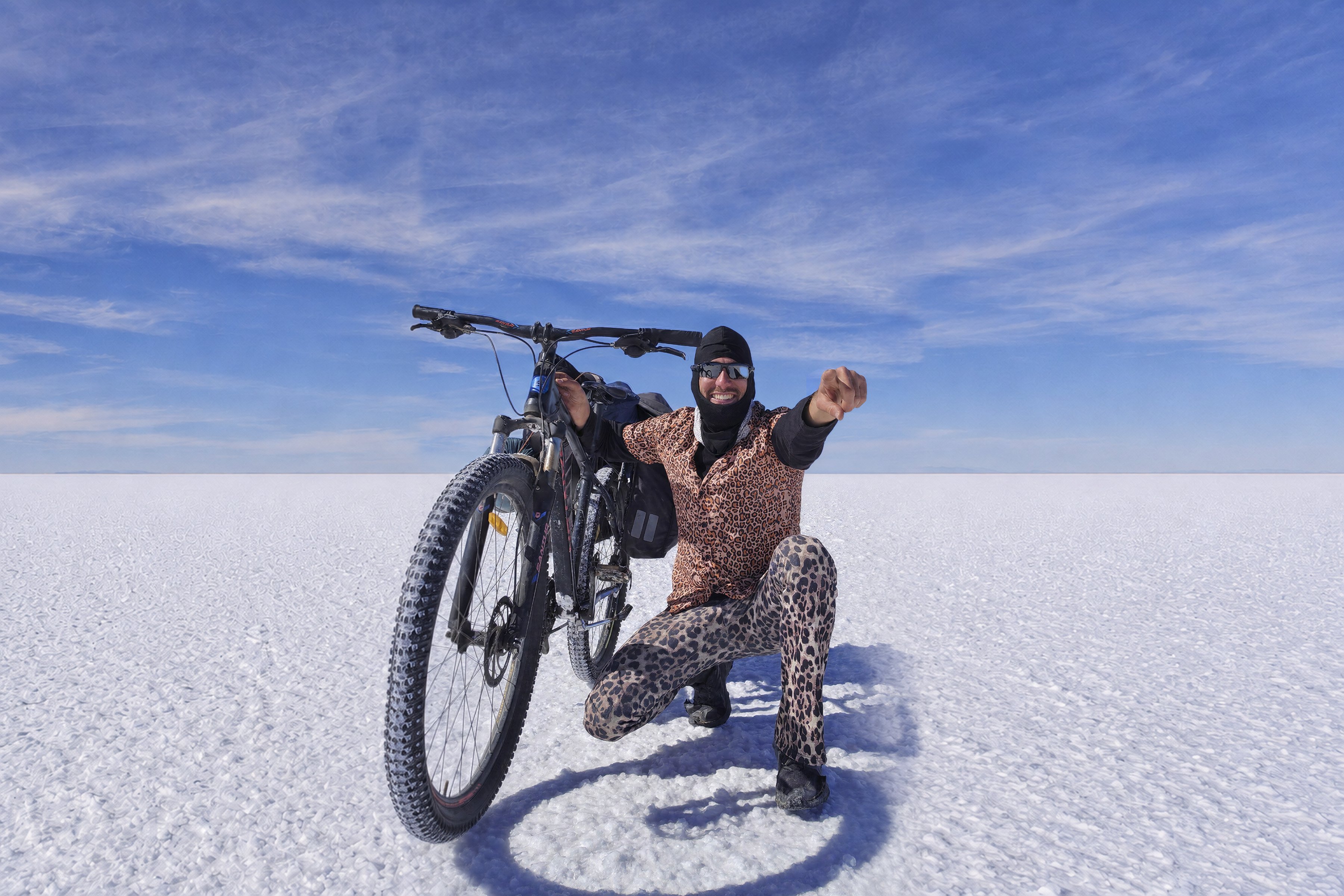
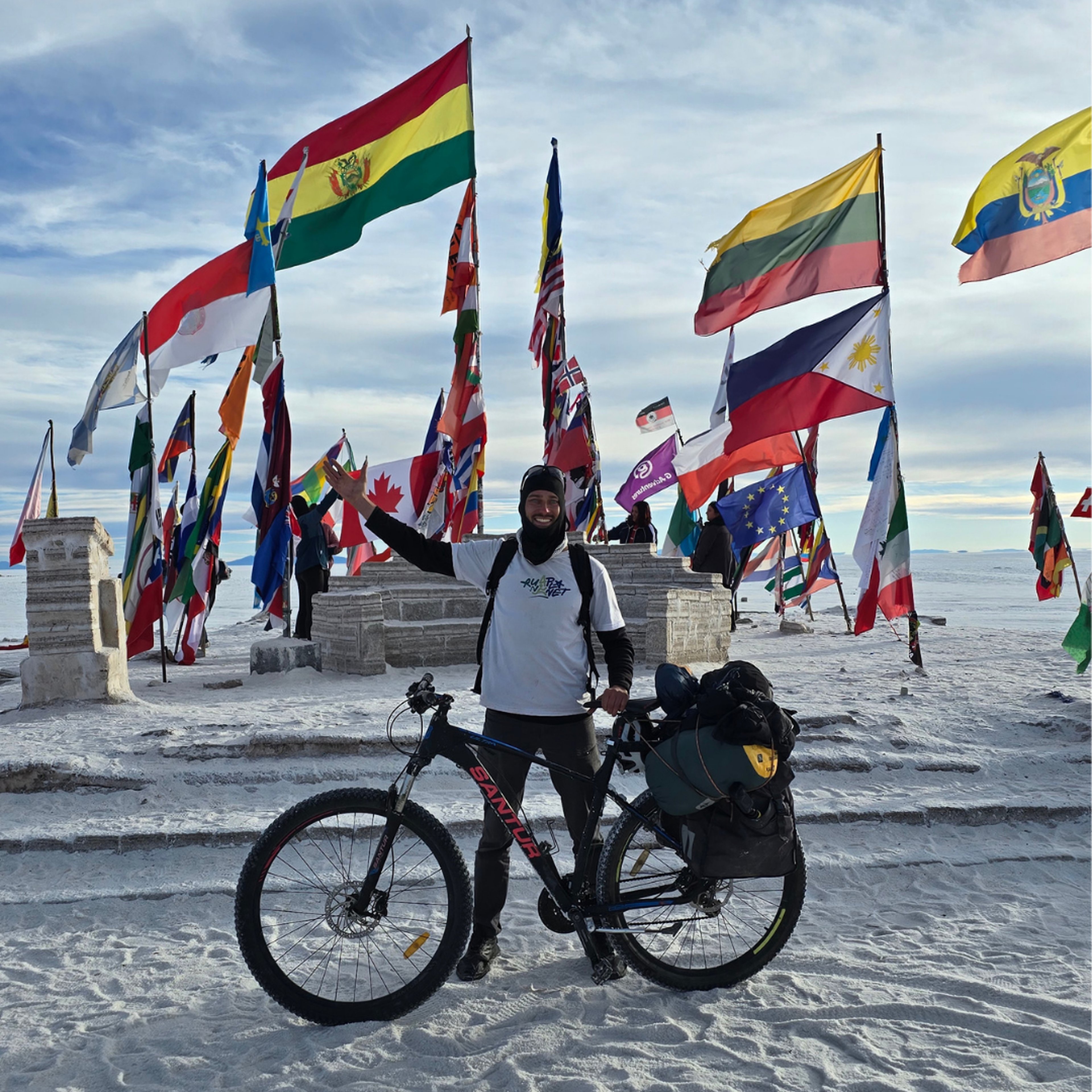
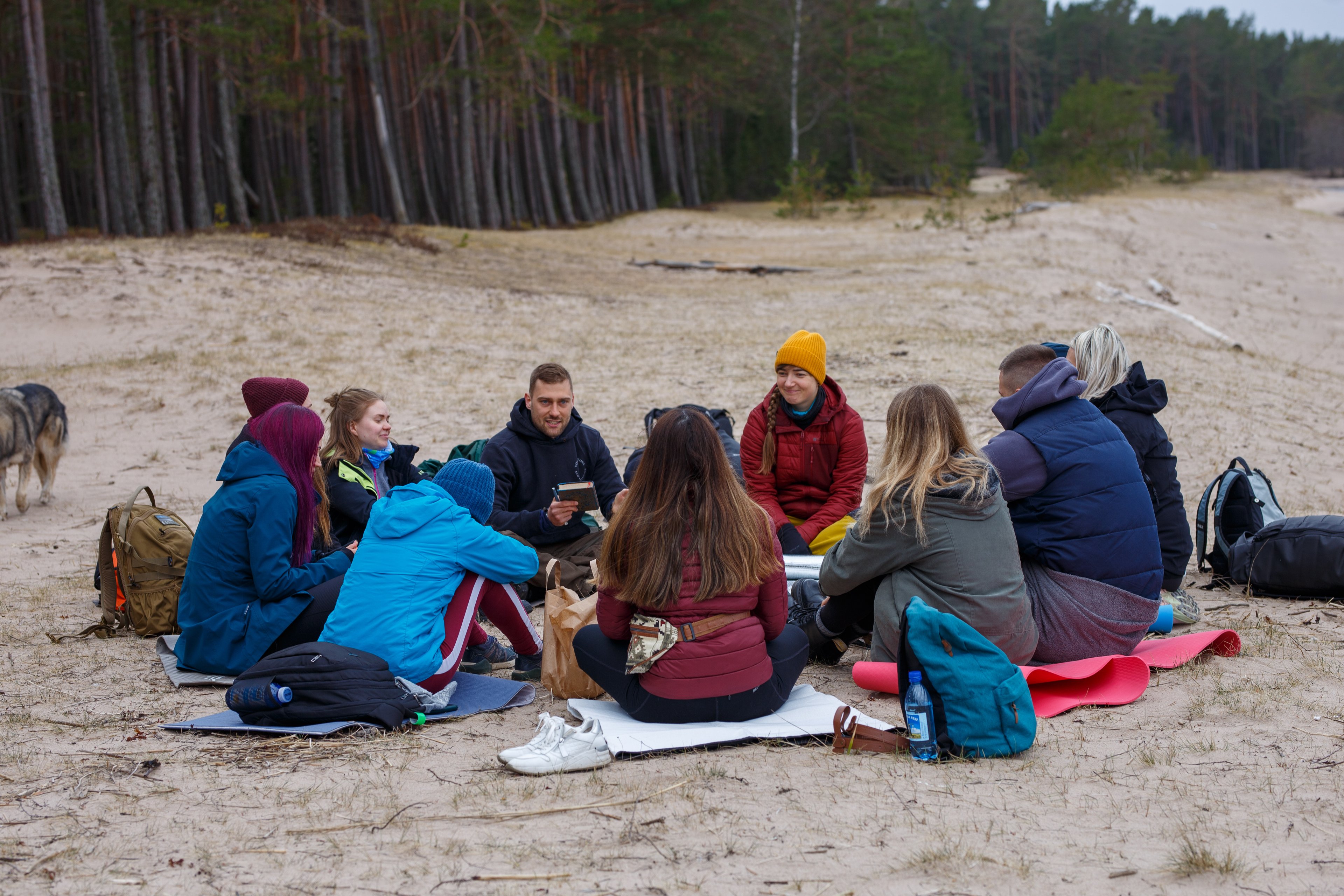
Somewhere along the way, the accounting stopped being the whole point. A documentary arm, Make It Matter Films, grew out of stops in Mexico, where he is producing one film on how an Indigenous community experiences and interprets climate change and another on donkey conservation. His charity running initiative, Run4Planet, has raised over $3,000 for local causes across four continents by turning his stops into pop-up running events. A third project, Mindful Mountain Adventures, brings followers together for group hikes with breathwork and workshops. Through the self-discovery of passions like videography and work with animal rescues and conservation, the pure science-based expedition didn't quite fit anymore under the name "zero impact." "I'm moving through the planet by not just leaving no trace," he says. "I'm trying to create a positive impact beyond the places I travel through." He renamed it the ONE PLANET Expedition.
The fine print
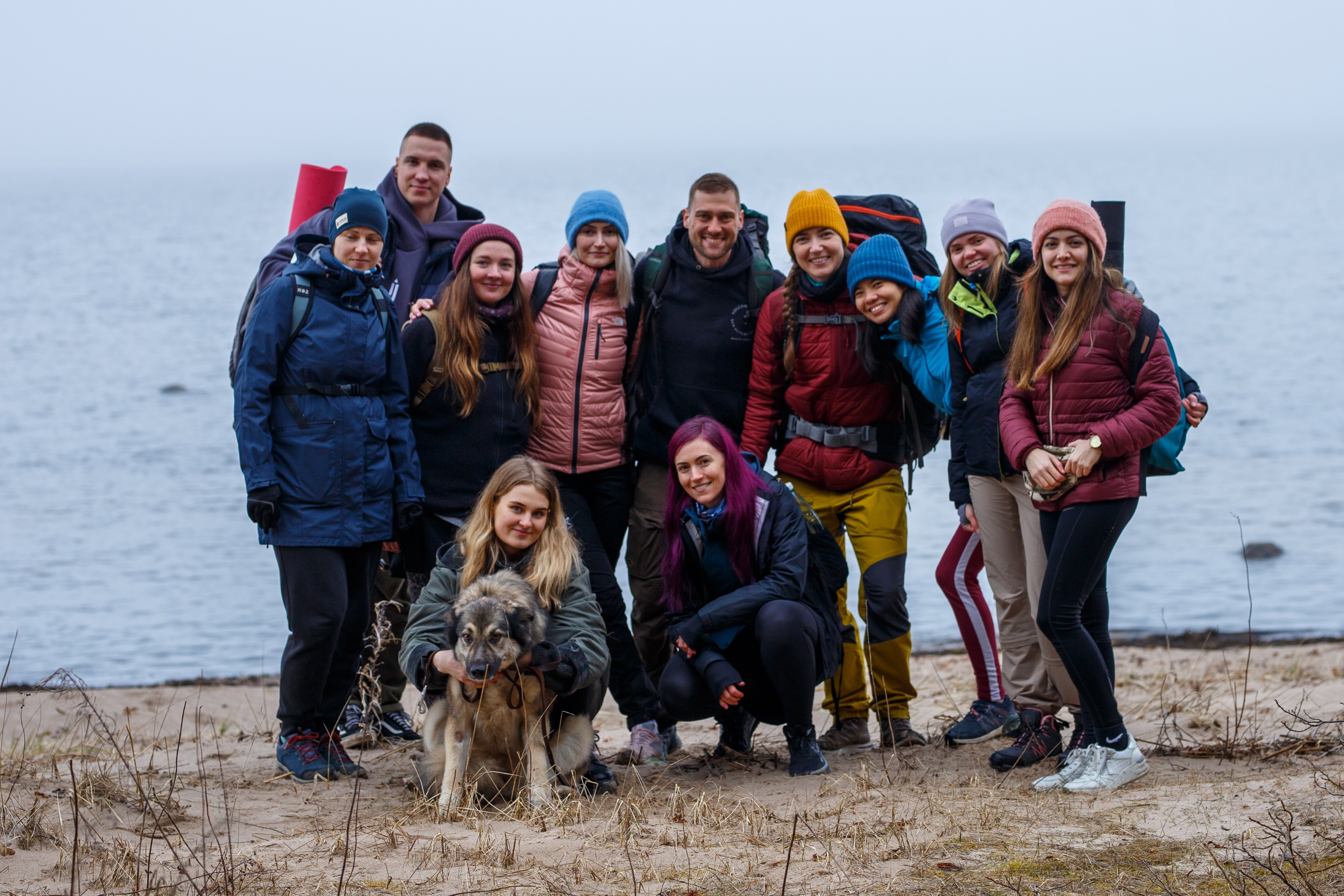
Reading the actual terms of "zero impact" takes some patience. His data collection doesn't just log kilometres; he wants to know how many hours a sailboat's motor ran during an otherwise wind-powered crossing, whether a given month was spent eating vegan in one community or something less tidy in the next, even whether the traveler in question is tall or small, more or less active, and eating food sourced locally or flown in. All of it is the fine print: the honest admission that "zero" was always going to be an estimate with conditions attached, not a clean number.
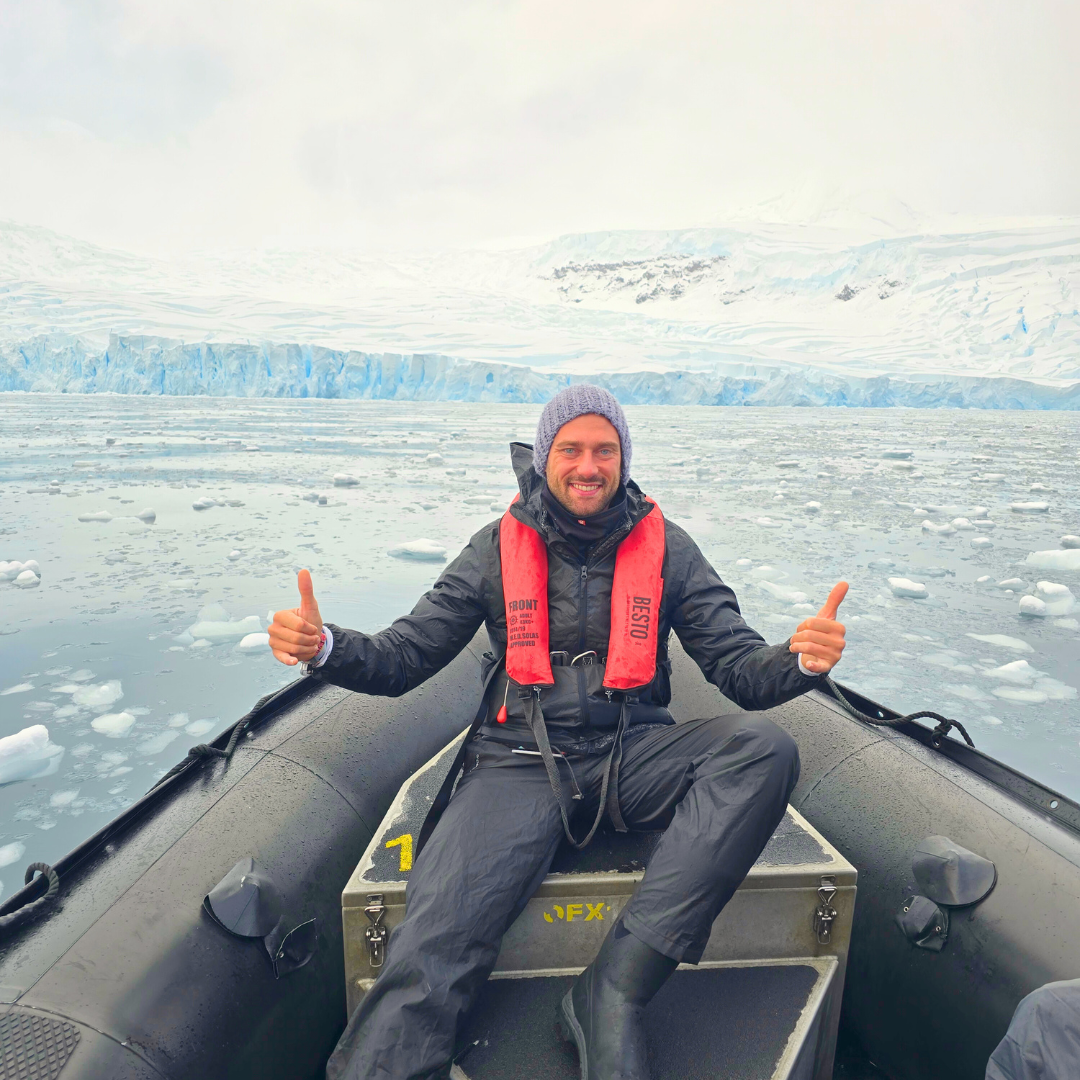
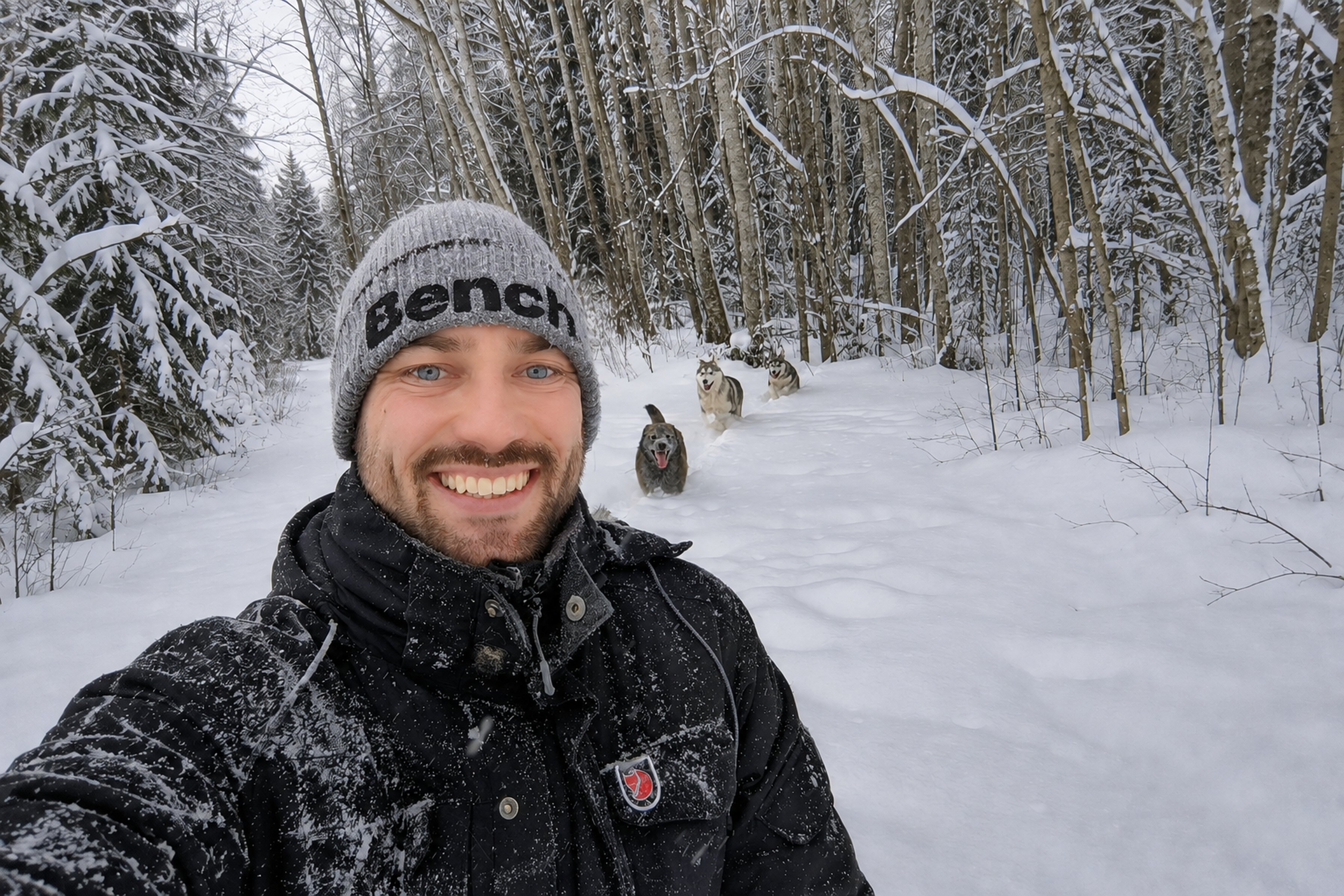
The largest condition attached itself after David finished a traverse from Antarctica to Alaska (hitchhiking, kayaking, cycling, no flights) and spent about six weeks working with sled dogs in Alaska. Heading south again to catch a sailboat waiting for him in Panama, he found the route home closed on two fronts at once: he'd been flagged in the border system and barred from re-entering the way he'd come, and the seasonal ferry that would have offered another way south wasn't running. Its federal subsidy, he said, had been cut, and its onboard generator failed to meet emissions standards regardless, an irony not lost on a man doing this for the emissions math. With no way back over land or sea, he flew, the expedition's one confirmed exception to a rule it otherwise keeps.
The Next Adventure Awaits
Join The Dust Report, our adventure newsletter. Stay up to date with travel stories from the world of adventure, in your inbox every other week.
By his own tracking, that single flight erased a sizable share of everything he'd worked all year to save. He doesn't treat it as a confession so much as a data point, one more line in a ledger that was always going to have a few. "That one decision," he says, with the flat delivery of someone reading his own spreadsheet back to himself, "demolished months I was trying to reduce my impact as much as possible." It is the closest the fine print comes to a punchline: measure everything closely enough, and eventually something measures you back.
Building a raft in the Bolivian Amazon
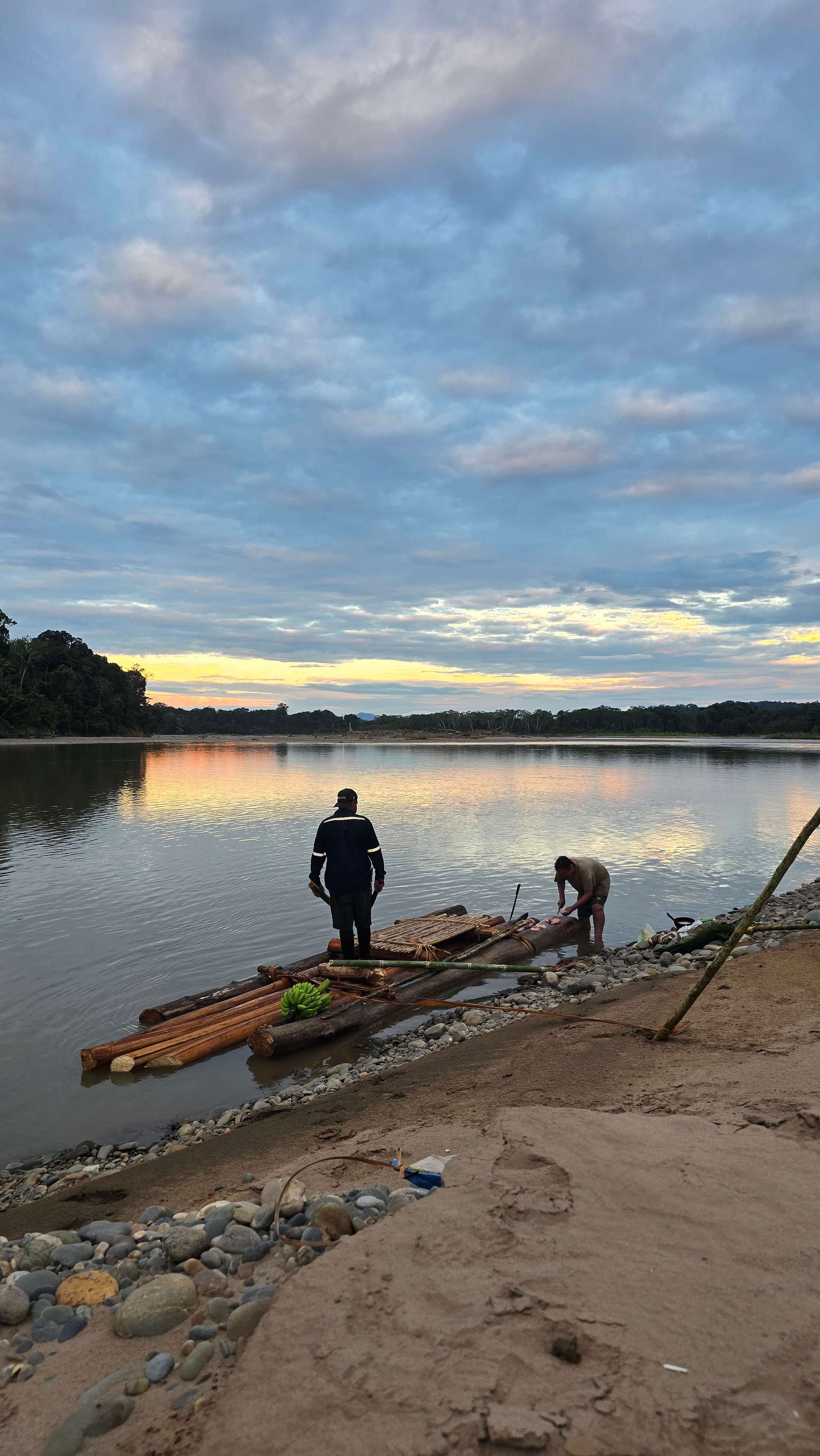
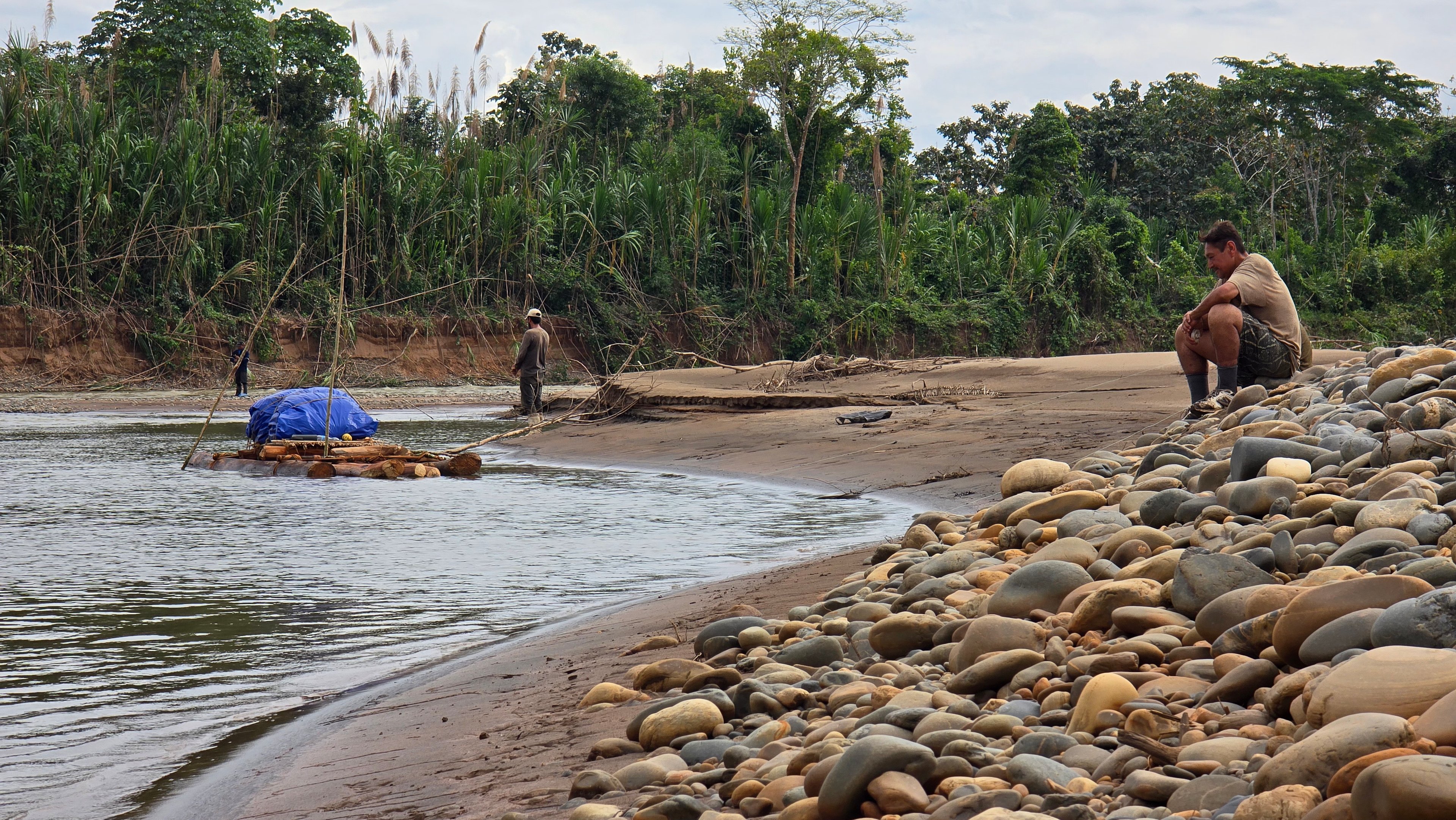
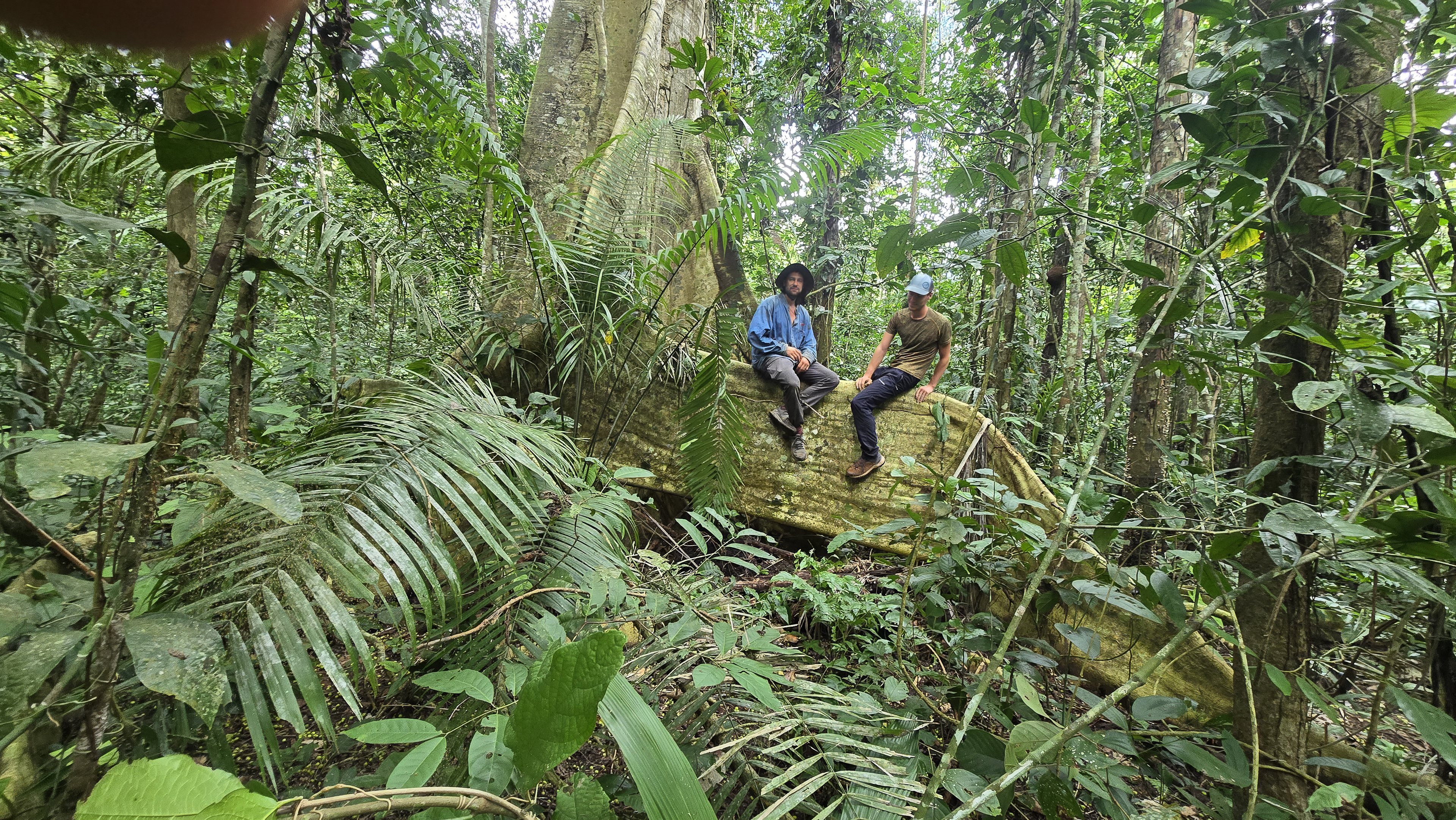
Not every leg of the expedition is measured in carbon. Some are measured in blisters. Near Rurrenabaque, in Bolivia's southern Amazon, David and a friend met an Indigenous guide in his sixties, known locally for taking biologists to find new species deep into the jungle on multi-week expeditions. Days later, he led them on a survival trip with machetes and no fixed route. The guide brought his cousin and the cousin's son along, five people total, no GPS, no map.
The days ran on a single question: what is there to eat. Some days and nights produced nothing. On better ones, the group worked a food chain from the bottom up, catching a frog, using the frog to catch a small fish, using the small fish to catch a larger one, a process David describes taking roughly five hours from start to finish. Getting home meant building a raft from scratch: three days spent finding the right trees, including one specific species whose bark serves as rope, cutting and lashing logs by hand until his hands blistered from the machete. On the river, a low branch knocked the sixty-year-old guide off the raft mid-current; he swam back, held on and hauled himself back aboard unaided. "This guy's like Superman, with his age," David says. There's no video of any of it, only photos; the footage habit came later, for a future YouTube channel he plans to launch once the expedition ends.
Deported into the Darien Gap
One of the expedition's hardest stretches by his own account came at the Darien Gap, the roadless, cartel-controlled jungle straddling Colombia and Panama. David crossed into Panama without an exit stamp from Colombia and was caught and deported back by the Panamanian military. He trekked back through the jungle to a small Caribbean coastal village to sort out the paperwork, and while he waited, connected with a Kuna community on the way who took him in. "An extraordinary experience," he calls it, "which would never have happened if I would not have carried on."
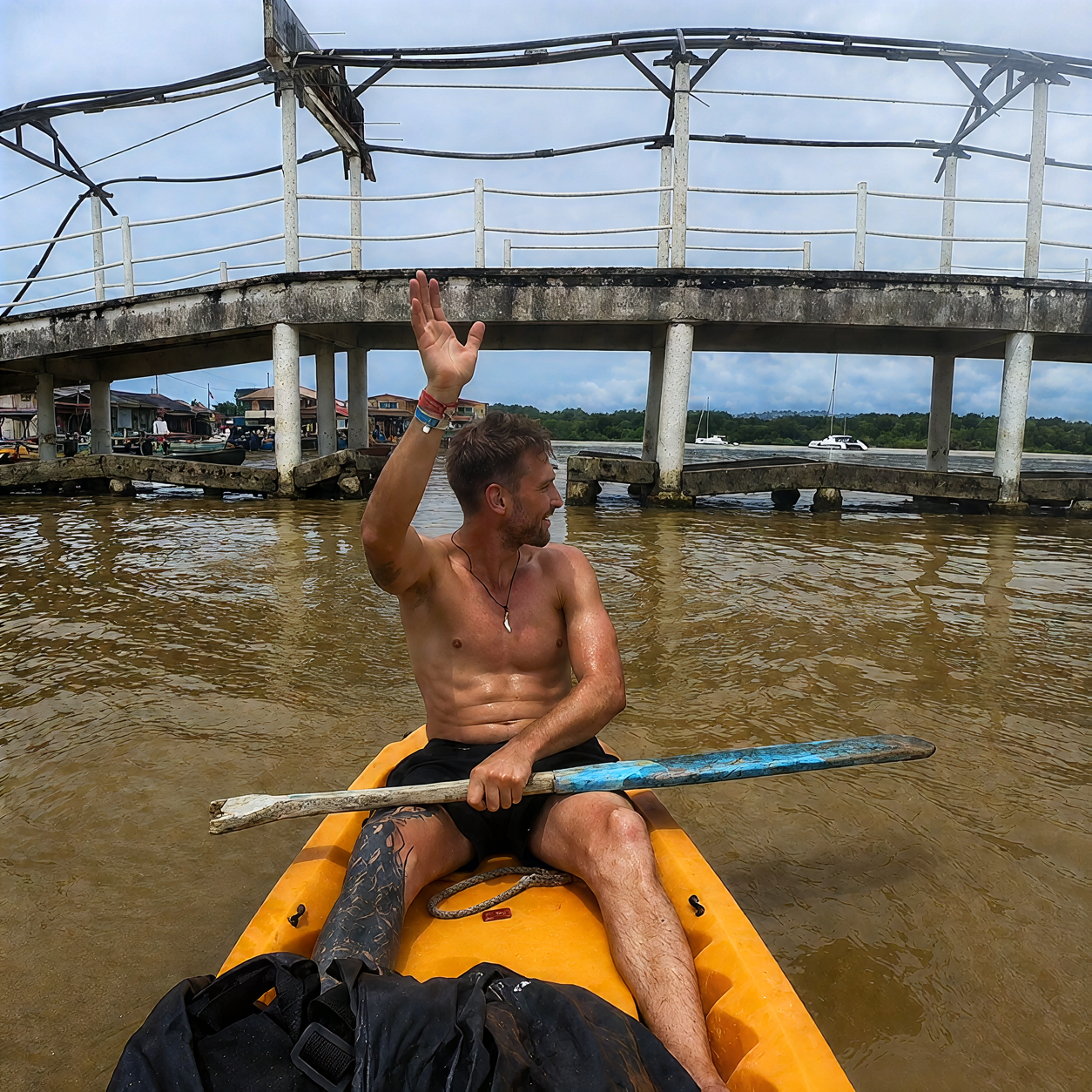
Once the stamp was sorted, he tried again, this time by kayak, no life jacket, no GPS, attempting a sea route around the most dangerous stretch of the Gap. A storm rolled in mid-crossing, his gear sliding loose in the unstable kayak, and he turned back to the same Kuna village rather than push his luck. He completed the crossing roughly two weeks later, with the same family's continued help, rather than trying to force it alone. He is direct about how he made that call not to push through the storm. "There's a thin line," he says, "of when is the time also to say okay, my life is on the line, and it might take longer, but it's time to just step one minute back and change directions, to get to the same goal."
Money as a variable, not a requirement
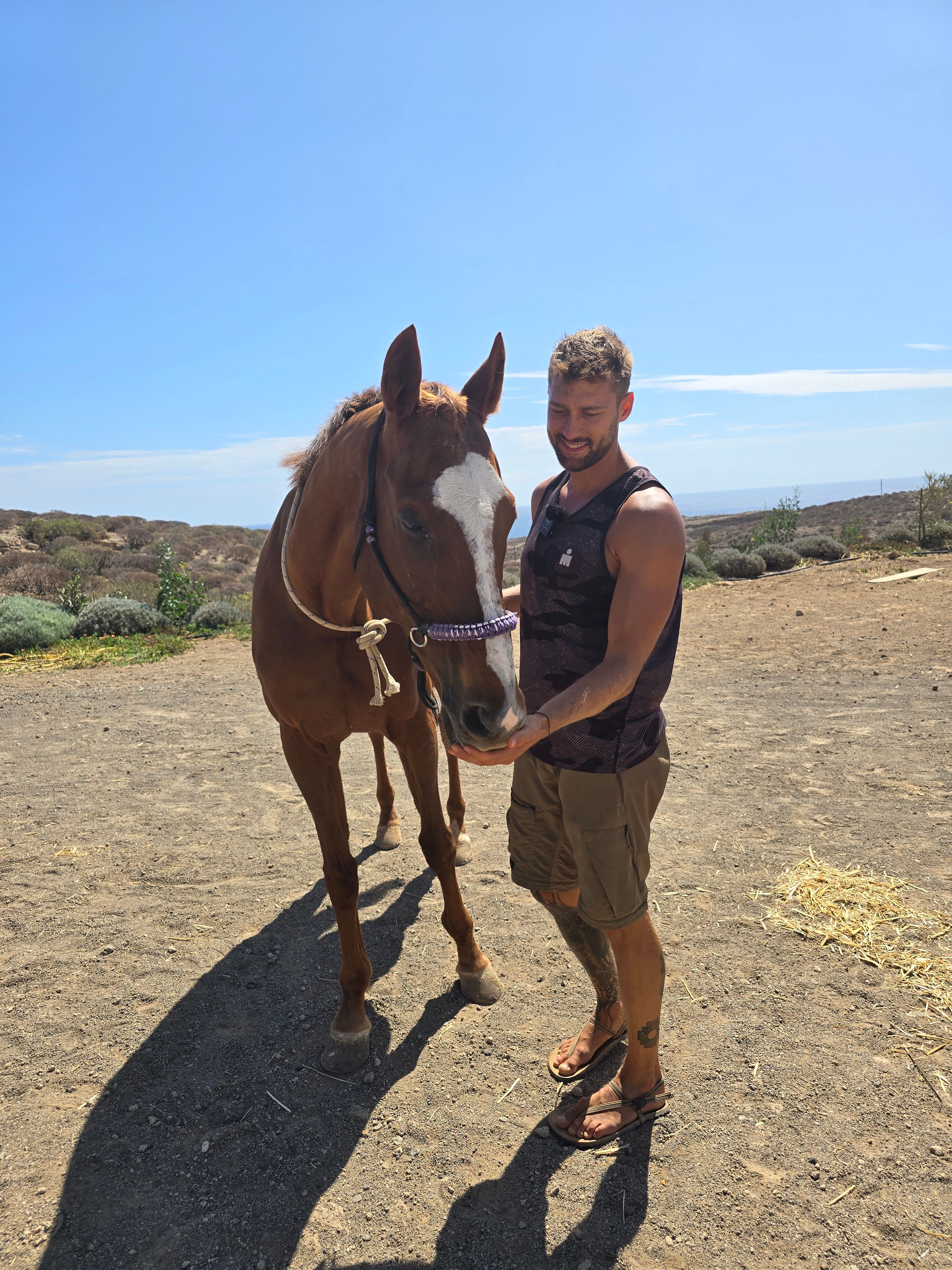
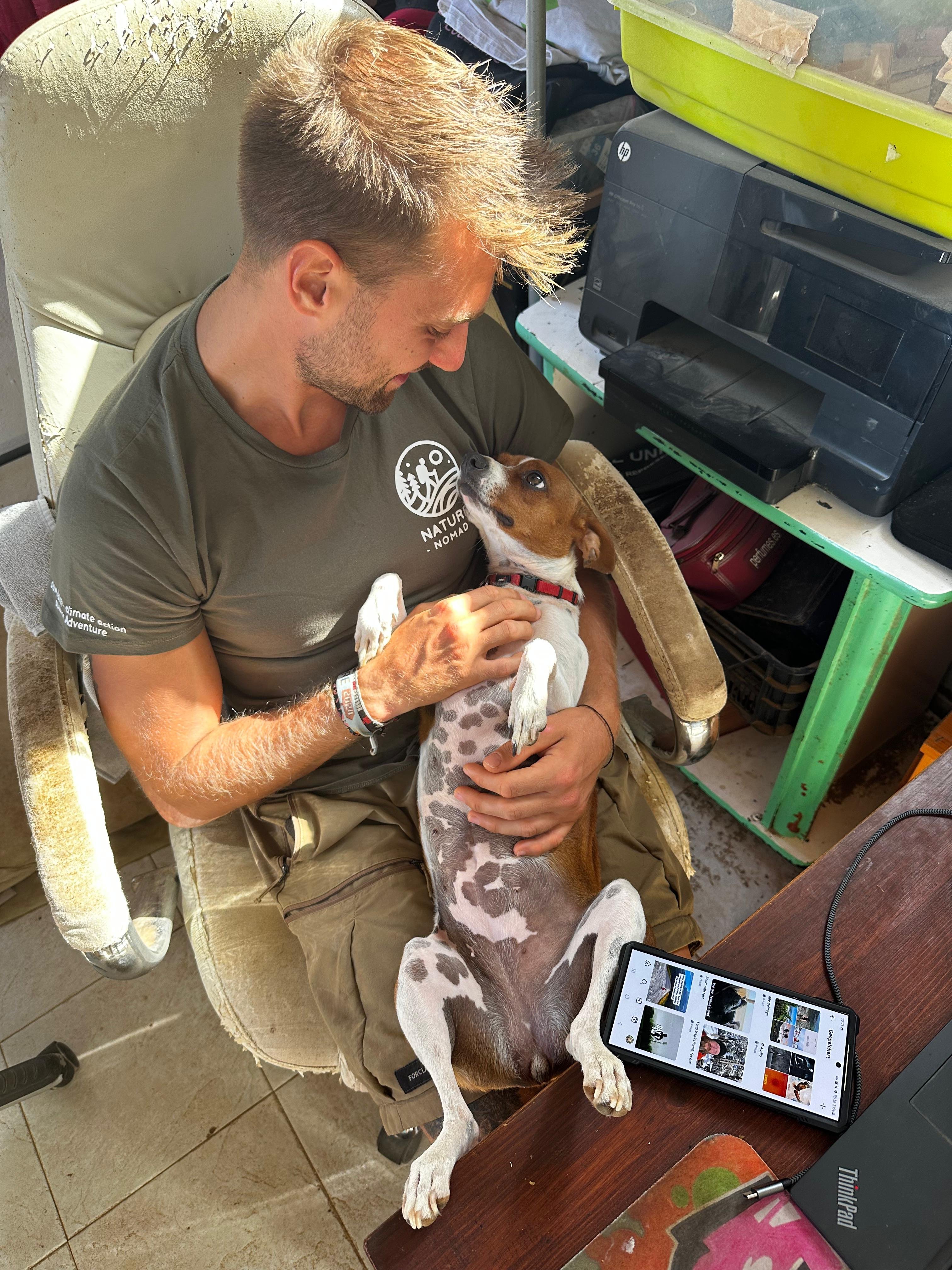
David was already traveling on a low budget when, in early 2025, he was robbed in Brazil and left with nothing. What followed wasn't a return home but an even leaner stretch: hitchhiking, Couchsurfing, Workaway placements, dumpster diving, asking bakeries and restaurants directly for food. When funds ran especially short, he picked up paid videography work, a skill he'd picked up on the road rather than arrived with, to cover the gap. For three months, he volunteered as a videographer at an animal rescue centre in Tenerife, living off-grid with food, housing and community provided. "I spend zero, not one cent, over months," he says, "because I'm living off-grid, there's not even a shop I could spend money on." He sees volunteering less as a fallback than a strategy: a way to stretch a shrinking budget while getting more out of a place, not less. Deliberately not carrying much money, he says, is part of what keeps the trip generating the kind of situations it does.
The long way home
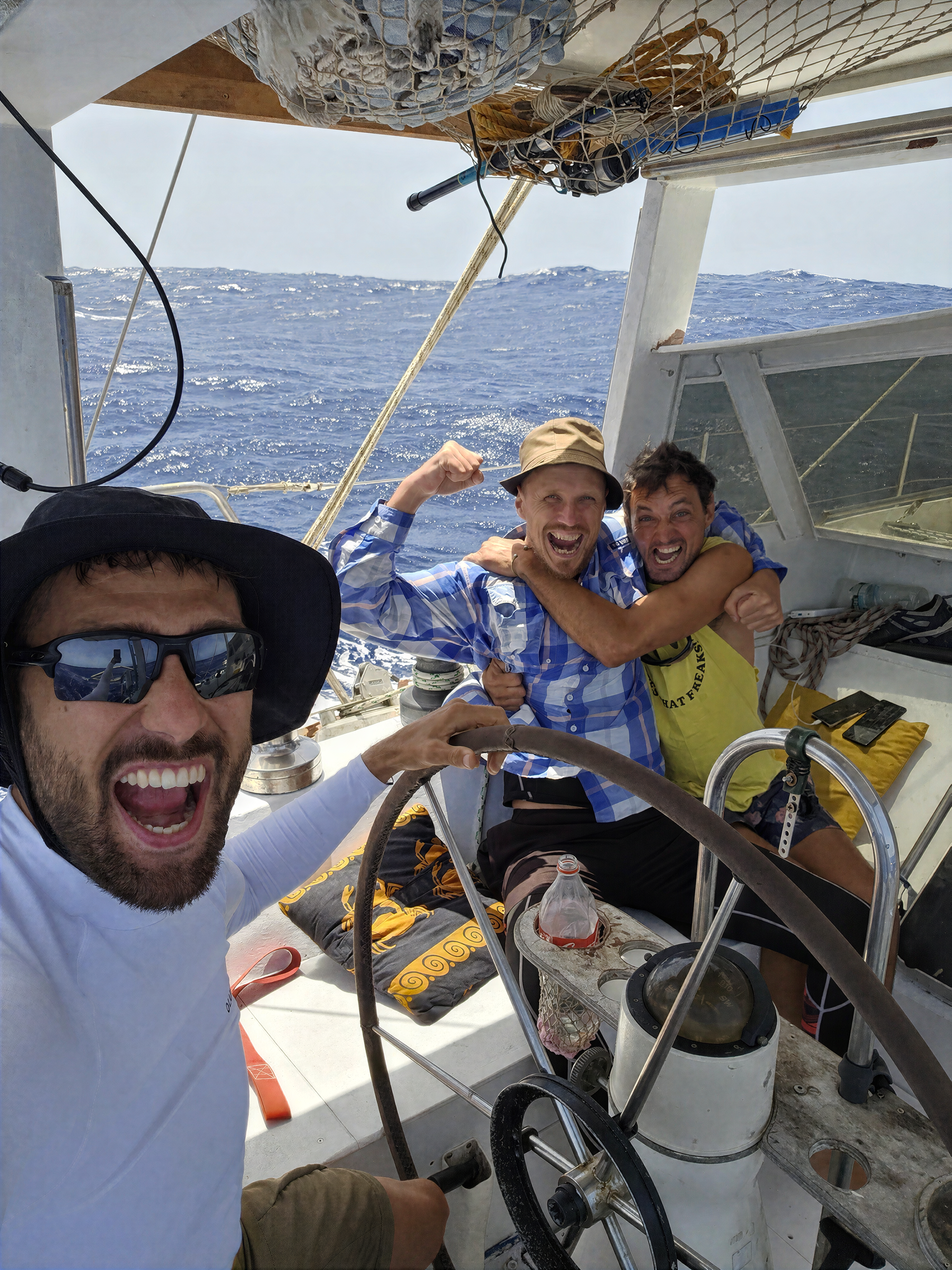
Three years in, David is in Australia, at the start of what he calls the Long Way Home: hitchhiking toward the coast to help out at an eco-farm that keeps Nigerian Dwarf goats, then inland to the Northern Territory for a project with an Aboriginal art centre. From there, he hopes to crew on a sailboat to Indonesia before the window closes with the start of monsoon season, then hitchhike the rest of the way to Germany, with arrival planned for 2028. The distance has changed how he thinks about home rather than making it recede. "I got closer, from the feeling, to my home the farther I was getting from it," he says, "and the longer it took."
Asked to sum up what all of it, the accident, the raft, the kayak, the flight he didn't want to take, actually means to him, he doesn't reach for a sentence. He gives three separate words: connection, conscious, slow.
© 2026 Grit & Dust (The Fine Print on Zero Impact Travel). Photos © 2026 David Bossek. All rights reserved. No part of this article or images may be reproduced, distributed, or transmitted in any form without prior written permission.